Your alarm rings late, the coffee spills on the counter, and three urgent emails hit your inbox before you even start the commute. Finding a way to anchor yourself during chaotic mornings ensures stress does not dictate your entire day. These seven simple routines interrupt the momentum of anxiety and help you regain a sense of clarity, no matter how demanding your schedule becomes. Mindfulness does not require retreating to a silent mountain sanctuary or chanting for hours; it simply asks you to pause and reorient your attention. By intentionally shifting your focus in small, manageable bursts throughout your routine, you reclaim control over your emotional state and cultivate a deep sense of resilience.
What Mindfulness Means in This Context
Mainstream wellness trends frequently obscure the true definition of mindfulness, wrapping the concept in an unapproachable layer of mysticism and rigidity. You might falsely assume that clearing your mind of all thoughts represents the ultimate goal, leading to intense frustration when your brain inevitably produces new ideas. In the context of a demanding daily routine, mindfulness simply functions as a highly practical tool for objective observation. It provides a reliable method for stepping out of autopilot and directly engaging with the reality of your present environment.
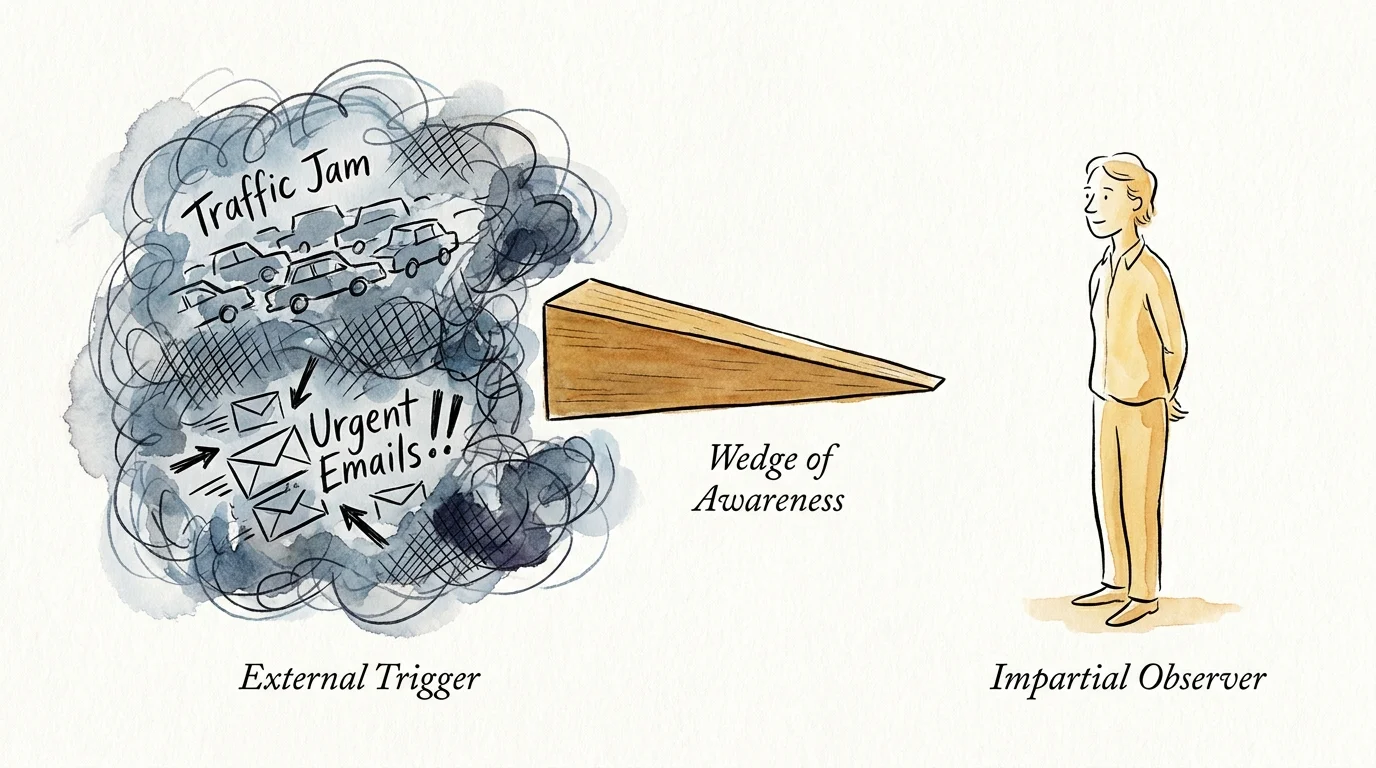
Operating on autopilot allows minor irritations to hijack your mood before you even realize what is happening. When a colleague makes a passive-aggressive comment or a traffic jam derails your morning commute, your subconscious conditioning instantly triggers a cascade of frustration. Mindfulness inserts a vital wedge of awareness between the triggering external event and your subsequent internal reaction. It empowers you to notice your clenching jaw and racing pulse without immediately surrendering to the rising anger.
This subtle shift from an active participant in your anxiety to an impartial observer fundamentally changes how you experience stress. You stop fighting the unpleasant emotions and instead acknowledge their presence without judgment. Accepting your current emotional state dilutes its power over your behavior, allowing you to choose a measured response rather than an impulsive reaction. You reclaim your agency in situations that previously left you feeling entirely powerless and overwhelmed.
Science Snapshot: How Small Pauses Rewire the Brain
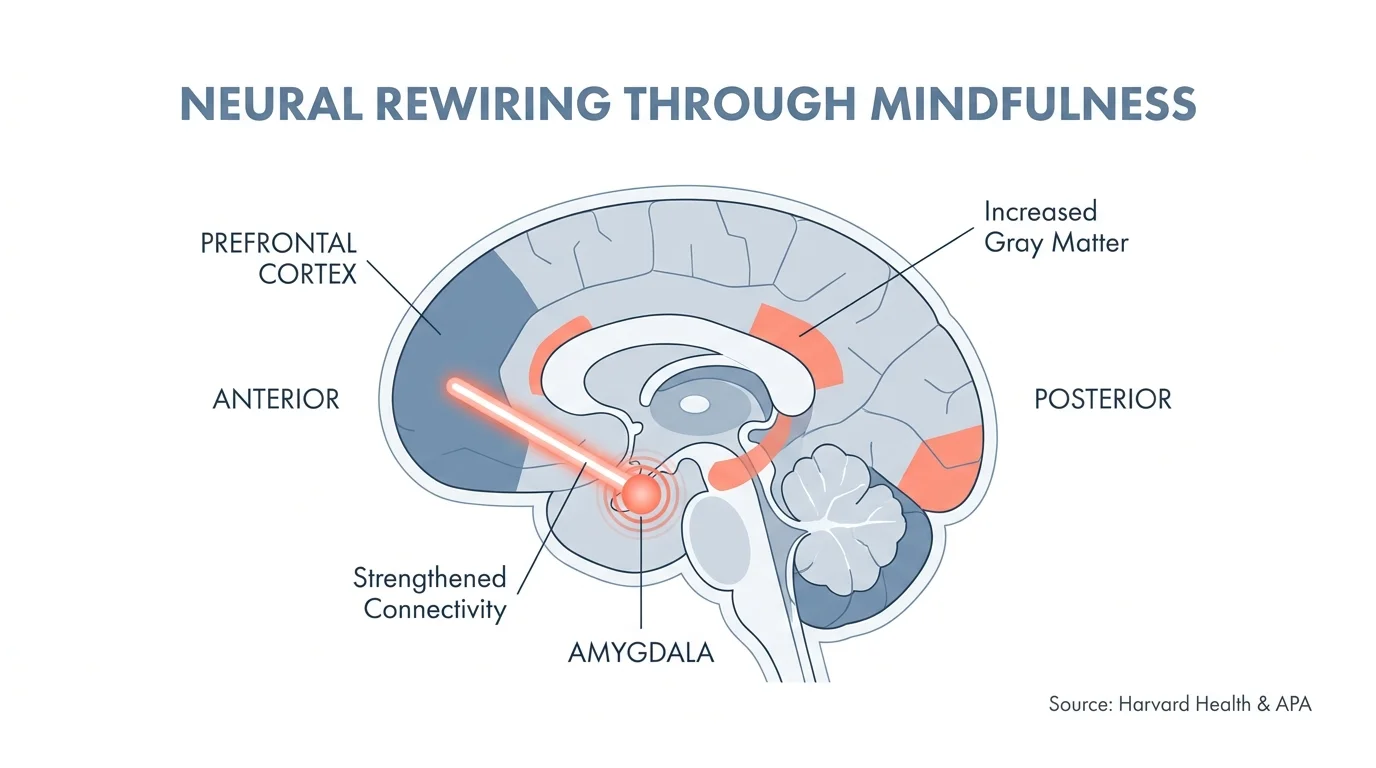
Scientific inquiry into the mechanics of the brain reveals that persistent stress physically alters your neural pathways over time. The amygdala, which is responsible for detecting threats and triggering the fight-or-flight response, becomes chronically hyperactive when you face continuous modern pressures. This constant state of alert prevents the prefrontal cortex from executing complex problem-solving and emotional regulation. Consequently, your mood remains fragile and highly reactive to minor daily inconveniences.
However, researchers demonstrate that introducing brief moments of intentional focus actively counters this neurological deterioration. According to a study from Harvard Health, consistent mindfulness practices strengthen the connectivity between the prefrontal cortex and the amygdala. This enhanced neural communication allows your brain to quickly dial down panic responses when an unexpected challenge arises at work or home. You begin to process stressful stimuli with grounded logic rather than raw, unfiltered emotion.
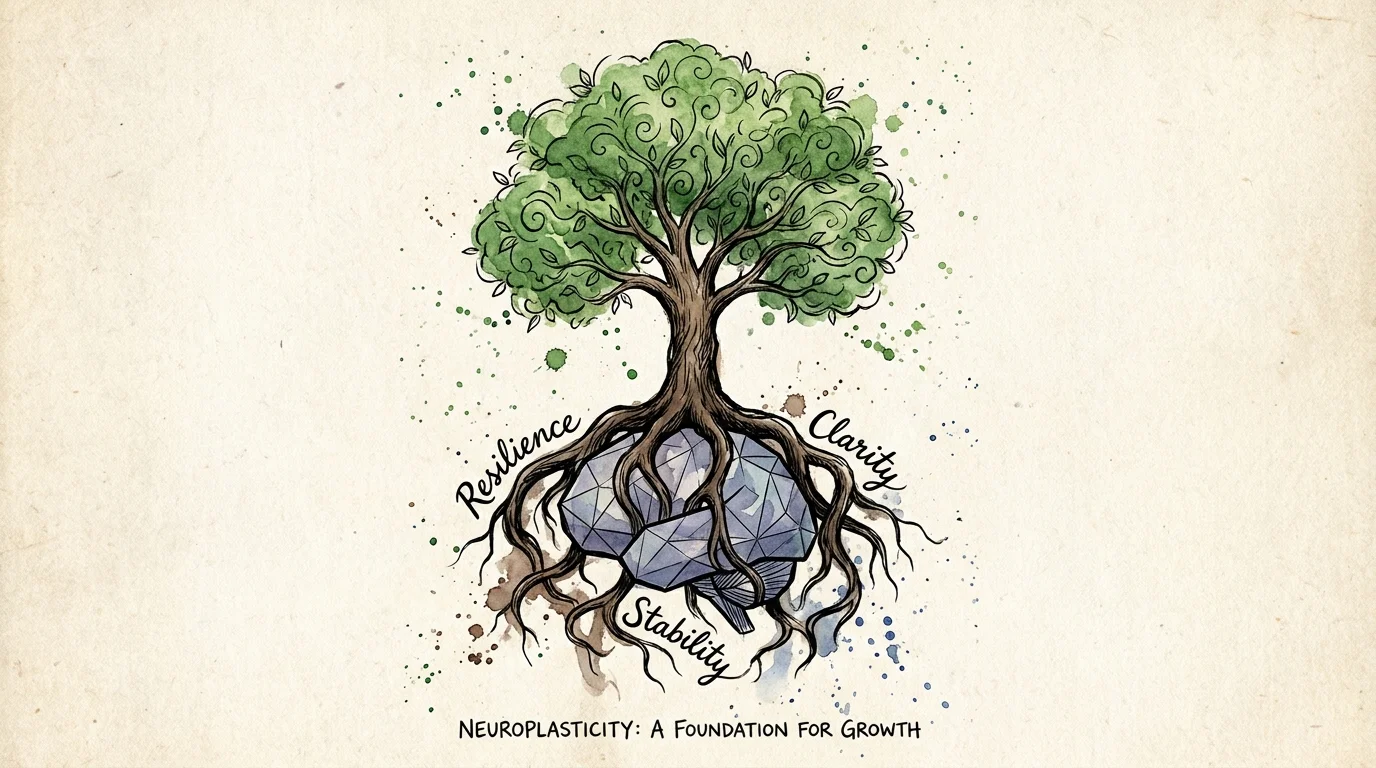
Furthermore, taking deliberate pauses throughout the day capitalizes on the principle of neuroplasticity—your brain’s inherent ability to rewire itself based on repeated behaviors. Supporting this concept, research published by the American Psychological Association highlights that targeted mental exercises physically increase gray matter density in areas associated with emotional stability. These structural changes confirm that quieting your mind is not merely a psychological placebo; it represents a tangible biological upgrade. Your daily habits literally reshape the architecture of your brain to support lasting tranquility.
Daily Integration Framework: 7 Habits to Anchor Your Day
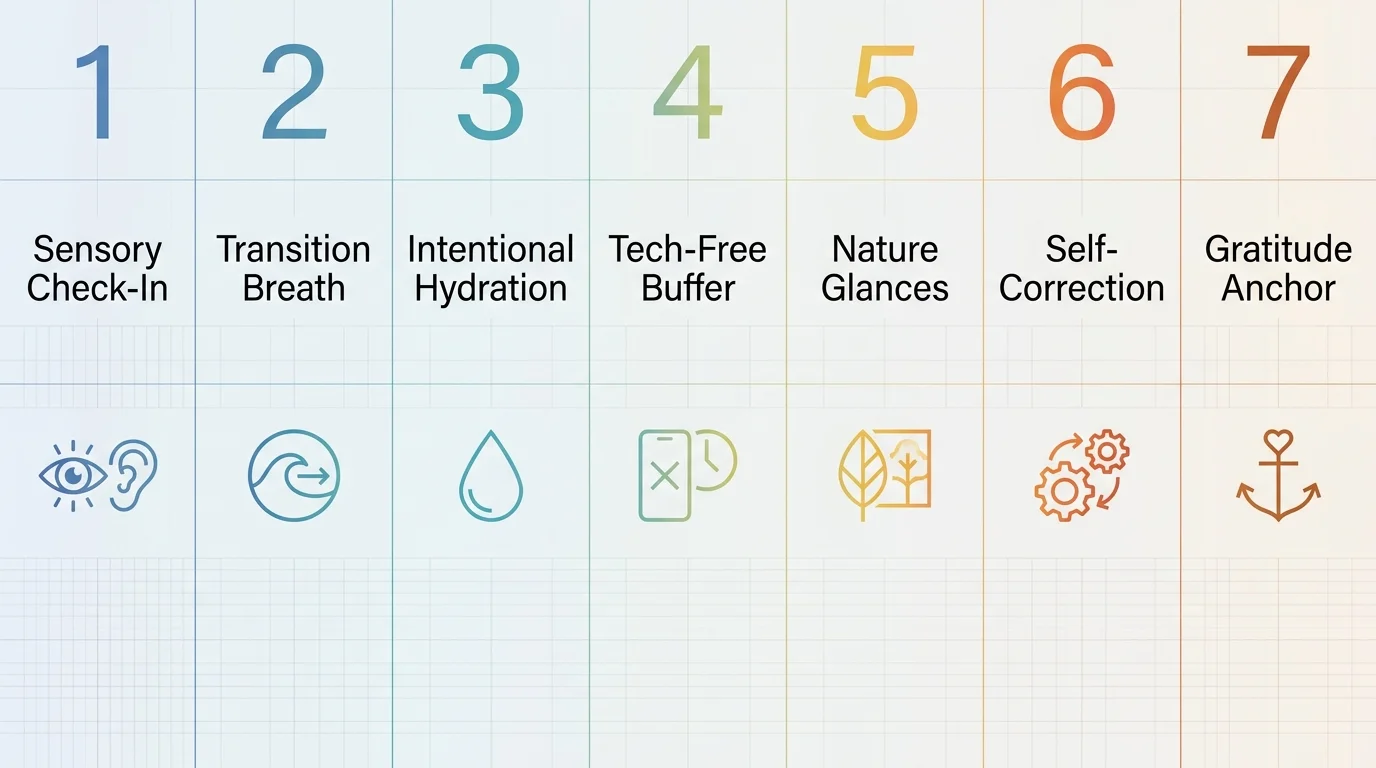
Building a resilient mindset requires you to move beyond abstract concepts and implement concrete actions throughout your schedule. The most effective approach revolves around a continuous cycle of pausing, observing, and responding deliberately. Adopting the following seven habits provides a structured, realistic framework to weave emotional regulation seamlessly into your busiest days.

The One-Minute Sensory Check-In
When your thoughts spiral into worry about an upcoming presentation, you detach from your immediate physical reality. Bringing your awareness back to the present requires an active shift in focus; engaging your five senses provides the fastest and most reliable route. Taking thirty seconds to notice specific details around you forces your brain to process real-time data instead of hypothetical future scenarios.
You might notice the low hum of the office refrigerator, the coarse texture of your desk chair, or the way the morning light hits the conference room wall. Grounding yourself in these ordinary, mundane details immediately dilutes the intensity of sudden anxiety spikes. This active observation stops the momentum of a panic loop and returns you to a state of calm readiness, allowing you to tackle the next task with a clear head.
The Transition Breath
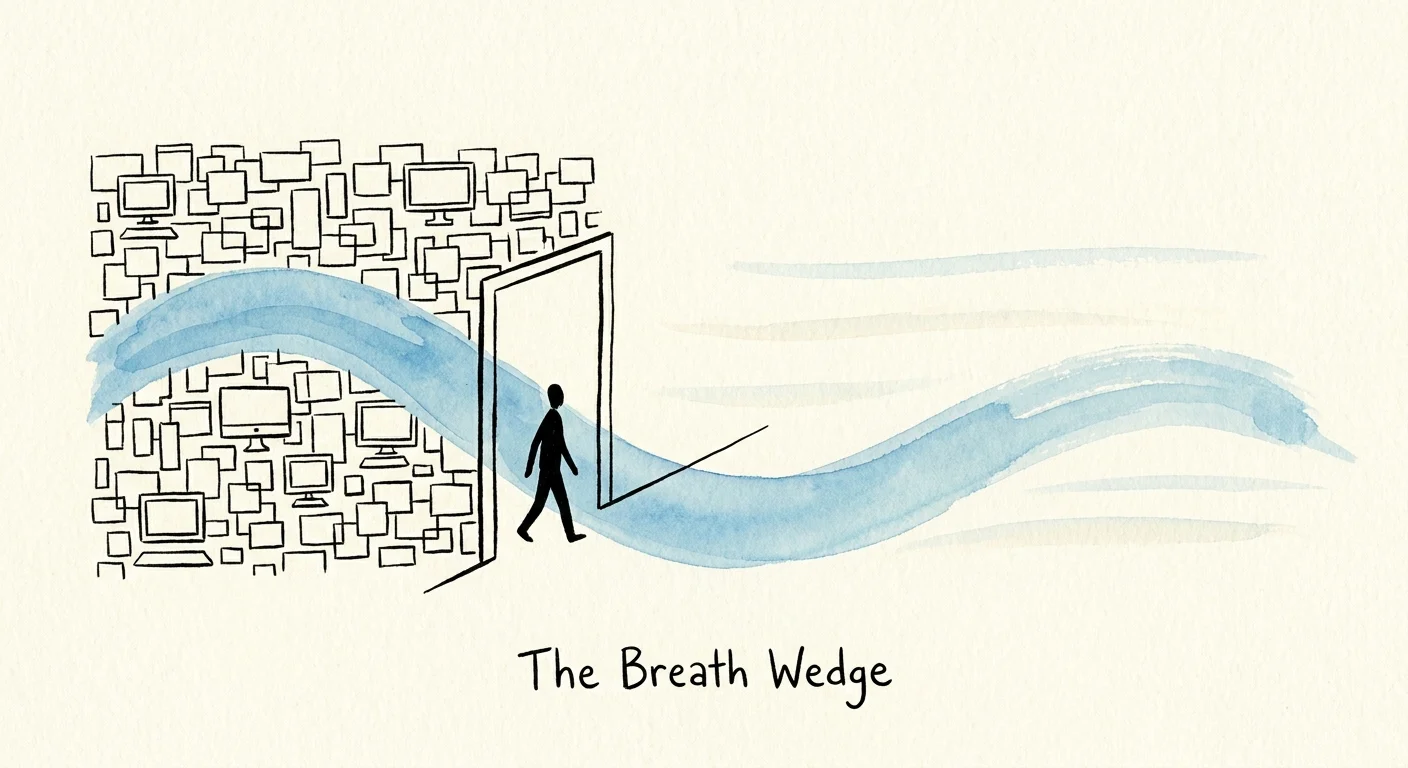
Modern work demands constant context switching, pushing you to jump from a complex spreadsheet directly into a contentious team meeting. This rapid shifting creates cognitive friction, leading to a profound sense of emotional exhaustion by mid-afternoon. Inserting a deliberate pause between distinct tasks gives your nervous system a crucial moment to recalibrate and clear lingering tension from the previous activity.
Before opening a new application, answering the phone, or stepping through a doorway, take one slow, deep inhalation followed by an extended exhalation. This physical action signals to your body that a transition is occurring, allowing you to mentally close out the prior engagement. You enter the next task with renewed focus and a steady emotional baseline, rather than dragging the stress of the last hour along with you.

Intentional Hydration
Reaching for a glass of water usually happens on autopilot, serving merely as a background necessity while you type emails or scroll through your phone. However, transforming this mundane action into a mindful ritual offers a consistent, built-in opportunity to reset your mood. Hydration itself directly impacts cognitive function, but the act of drinking mindfully amplifies the psychological benefits exponentially.
As you lift your glass, pay close attention to the weight of the vessel in your hand and the temperature of the water against your lips. Feel the liquid traveling down your throat; acknowledge the brief moment of nourishment your body receives. This fleeting break from your incessant mental chatter anchors you deeply in the physical present, clearing away mental fog with zero extra time required from your schedule.

The Tech-Free Morning Buffer
Grabbing your smartphone the exact second you wake up instantly hijacks your mood, flooding your brain with stressful news alerts and urgent work requests. You begin your day reacting to the agendas of other people rather than proactively setting your own emotional baseline. Establishing a brief, device-free buffer zone each morning protects your mental energy during its most vulnerable and formative phase.
Commit to leaving your phone out of reach for the first thirty minutes after your alarm sounds. Use this quiet window to stretch your limbs, brew your coffee, or simply look out the window while your mind boots up naturally. Delaying the digital onslaught empowers you to enter the chaotic world from a place of grounded stability rather than frantic, adrenaline-fueled reactivity.

Mid-Day Nature Glances
Staring at fluorescent lights and glowing monitors for eight hours straight drains your mental reserves and elevates cortisol levels in your bloodstream. Human biology remains fundamentally wired to seek connection with the natural world, a vital concept researchers call the biophilia hypothesis. Depriving yourself of natural elements accelerates burnout and amplifies feelings of extreme irritability during long, demanding shifts.
You do not need an extensive hike in the woods to harness the restorative power of nature; brief, intentional glances provide significant emotional relief. Step out onto a balcony, open a hallway window, or simply focus your attention on the intricate details of a potted plant on your desk. Observing the organic movement of leaves or the shifting patterns of clouds offers a gentle visual break that actively soothes an overworked nervous system.
The Compassionate Self-Correction
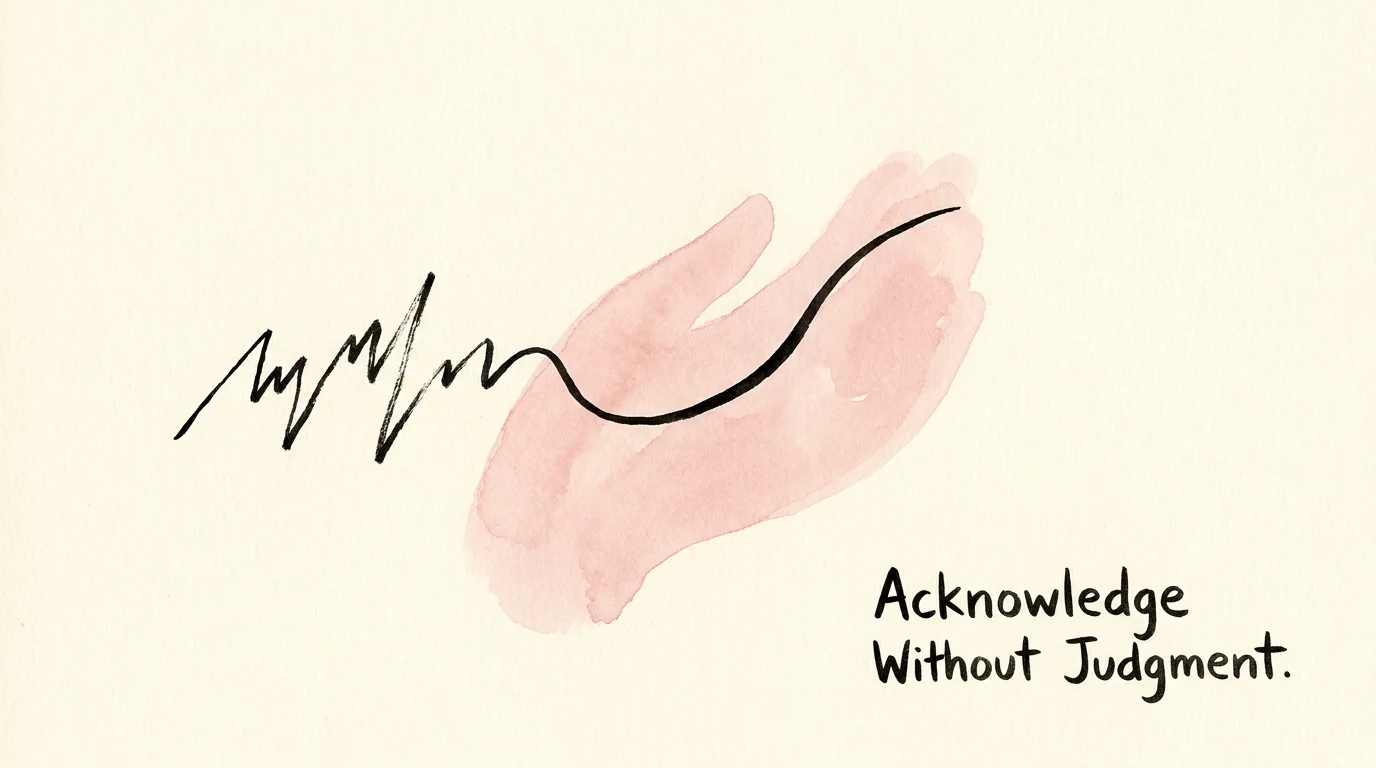
Your internal dialogue dictates your overarching mood more than any external circumstance you encounter throughout the day. When you make a minor mistake, a harsh inner critic often amplifies a small error into a catastrophic failure, spiraling your mood rapidly downward. Recognizing this deeply ingrained negative self-talk is the critical first step toward dismantling a toxic internal environment.
Instead of berating yourself for missing a deadline or forgetting a household errand, actively reframe the narrative with objective compassion. Tell yourself that making mistakes happens to everyone; remind your brain that a single misstep does not define your overall competence or worth. This gentle self-correction prevents a momentary lapse from ruining your entire afternoon, preserving your precious emotional energy for productive, forward-facing solutions.

The Evening Gratitude Anchor
Ending your day by ruminating on everything that went wrong ensures you carry stress directly into your sleep cycle, disrupting your physical recovery. The human brain naturally clings to negative experiences as an evolutionary survival mechanism, a phenomenon widely known as the negativity bias. You must actively counteract this primitive instinct by directing your attention toward positive occurrences before you close your eyes.
Identify one specific, positive moment from your day, no matter how small or seemingly insignificant it appears on the surface. Reflect on the warmth of a good cup of tea, a highly productive conversation with a colleague, or a quiet, peaceful moment on your commute home. Highlighting a singular success signals to your brain that the day contained genuine value, allowing you to drift off with a sense of quiet contentment rather than unresolved anxiety.
Obstacles and Grounded Solutions
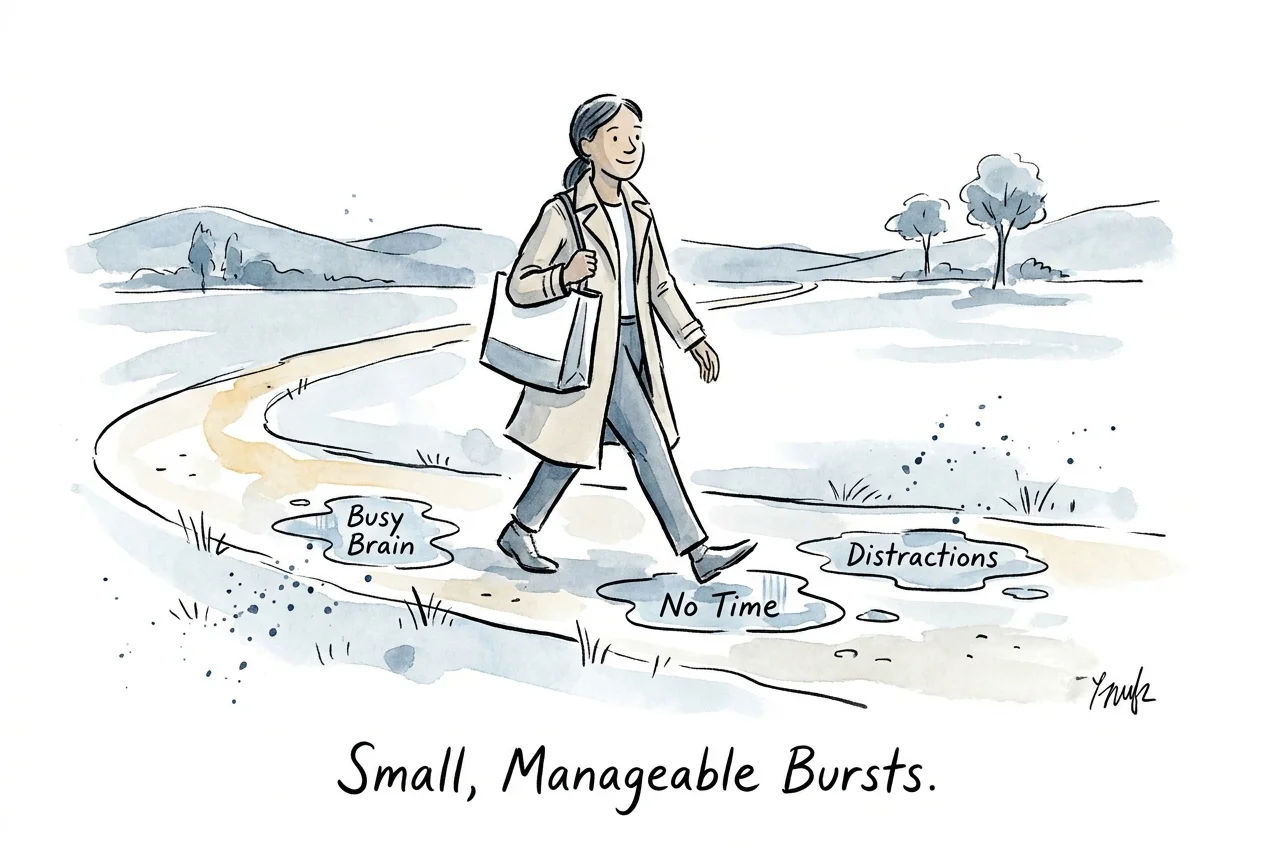
Adopting a new mental framework rarely happens without encountering internal resistance and practical, everyday hurdles. The most pervasive barrier you will face is the deeply held illusion that you simply lack the time to practice mindfulness. When deadlines loom large and familial responsibilities pile up, pausing for even sixty seconds feels entirely counterproductive and inherently stressful.
To dismantle this specific obstacle, you must stop viewing these habits as separate tasks added to your already overflowing to-do list. Instead, attach these micro-pauses to actions you already perform automatically, a highly effective technique behavioral experts call habit stacking. Taking a deep, intentional breath while waiting for your computer to boot up requires zero extra minutes but fundamentally shifts your morning trajectory toward calm.
Another common frustration arises when your thoughts persistently wander the exact moment you attempt to focus on your breathing or immediate surroundings. Skeptics often misinterpret this cognitive wandering as a failure, leading them to abandon the practice entirely out of sheer annoyance. You must recognize that a distracted brain is functioning exactly as designed; the true victory of mindfulness lies in simply noticing the distraction.
When your mind inevitably drifts to your grocery list or an awkward conversation from yesterday, gently acknowledge the tangent without harsh self-criticism. Guide your attention back to your immediate sensory experience over and over again. Every time you redirect your focus, you perform a mental repetition that strengthens your cognitive discipline and builds lasting emotional endurance for the challenges ahead.
The Long-Term Benefits of Consistent Practice
Tracking your progress over several months reveals that these fleeting moments of awareness compound into a profound shift in your baseline wellbeing. Chronic stress relentlessly floods your system with cortisol, heavily compromising your immune system and accelerating physical aging. Relying on data provided by the National Institutes of Health, researchers suggest that mitigating this chronic stress response through daily mindfulness significantly reduces systemic inflammation and supports long-term cardiovascular health. You are not just improving your afternoon mood; you are actively extending your overall healthspan.
Beyond the physiological markers, consistent practice fundamentally alters how you interact with the people around you in your daily life. When you no longer operate on a hair-trigger of anxiety, you naturally become a more patient partner, a more attentive parent, and a highly collaborative colleague. You stop reacting defensively to perceived slights and begin responding to interpersonal challenges with measured, authentic empathy. Your internal calm inevitably radiates outward, quietly transforming the underlying dynamics of your professional and personal relationships.
Ultimately, reclaiming your emotional state through these small habits empowers you to navigate a chaotic world without losing your core sense of self. You realize that you cannot control the endless stream of external demands, but you possess absolute authority over where you direct your attention. This powerful realization fosters a quiet, unshakable confidence that permeates every aspect of your daily existence, allowing you to thrive amidst uncertainty.
Frequently Asked Questions
Do I need to practice these habits at the same time every day?
Rigid schedules often create more anxiety than they alleviate, especially for adults managing unpredictable work demands and complex family obligations. While consistency matters deeply, flexibility ensures you actually maintain the practice over the long term without burning out. Treat these habits as a versatile toolkit you can draw from whenever you notice your stress levels rising. Incorporating them naturally into your existing rhythm yields far better results than forcing them into a strict, unforgiving timetable.
What should I do if my mind keeps wandering?
A wandering mind indicates that you possess a normal, functioning human brain, not that you are failing at the practice of mindfulness. The core objective is not to eliminate thoughts entirely, but rather to observe them as they arise and consciously choose to return to the present moment. Think of each distraction as a valuable opportunity to practice redirection. Over time, this gentle persistence trains your brain to sustain focus for longer periods without becoming intensely frustrated.
How long does it take to see noticeable changes in my mood?
You will likely experience an immediate, subtle sense of relief the very first time you implement a sensory check-in or a deliberate transition breath. However, cultivating deep emotional resilience and permanently lowering your baseline stress requires consistent repetition over several weeks or months. Treat these daily practices like physical exercise; a single workout feels incredibly good, but lasting transformation occurs through steady, compounding effort over time.
Can these small habits replace formal meditation?
These practical micro-habits serve as an excellent entry point for beginners and a highly effective supplement for experienced practitioners alike. While formal seated meditation offers profound psychological benefits, it often remains inaccessible during a frantic workday when you need immediate emotional regulation the most. Integrating brief pauses into your routine provides real-time mood resets that complement, rather than completely replace, deeper periods of uninterrupted contemplation.
How do I remember to practice when I feel overwhelmed?
Relying solely on sheer willpower during moments of intense panic rarely works, as your brain immediately defaults to deeply ingrained survival patterns. You must establish environmental triggers ahead of time to consistently remind yourself to pause and breathe. Place a subtle sticky note on the edge of your computer monitor, set a gentle recurring alarm on your phone, or wear a specific piece of jewelry that serves as a physical prompt to ground yourself.
Moving Forward with Intention
Transforming your emotional baseline does not require a complete overhaul of your daily existence or a drastic reduction in your adult responsibilities. The most sustainable changes emerge from the steady accumulation of microscopic shifts in how you deliberately direct your attention. Integrating these seven simple habits into the natural crevices of your workday equips you with a reliable mechanism to defuse anxiety before it escalates into full-blown exhaustion.
Start by choosing just one specific practice to focus on tomorrow, whether you opt for the transition breath between meetings or the tech-free morning buffer. Committing to a single intentional pause builds the necessary momentum to eventually incorporate the entire framework into your life naturally. Remember that every time you consciously redirect your focus away from spiraling worries and back to the present moment, you are actively choosing mental clarity over chaotic reactivity. You hold the undeniable power to reset your mood at any given second; you simply need to remember to breathe.