Regaining mental clarity starts the moment you stop fighting your thoughts and instead choose where to direct your attention. When a minor email typo ruins your evening or a passing comment from a colleague spirals into a career crisis, simple cognitive techniques can break the cycle of rumination before it takes root. Constant analysis rarely solves problems; it usually just manufactures new anxieties out of thin air. Instead of drowning in hypothetical scenarios, you can use grounded, actionable mindfulness strategies to hit the reset button on your brain. By learning to anchor your focus in the present reality, you can transform an exhausted, overactive mind into a resilient tool that serves your true priorities and everyday wellbeing.

Demystifying Mindfulness for the Busy Adult
You often hear mindfulness described as a mystical state of total peace or a hollow buzzword tossed around in corporate wellness seminars. These definitions miss the practical reality of what cognitive awareness actually entails. True mindfulness simply involves observing your current experience without immediately reacting to it. You do not need to empty your mind or suppress your anxieties to practice it effectively.
Your brain naturally functions as a problem-solving machine. Overthinking occurs when this evolutionary survival mechanism goes into overdrive, treating minor social missteps or future uncertainties as immediate physical threats. You cannot simply turn off this mental machinery. However, you can change your relationship with your thoughts by recognizing them as passing mental events rather than absolute facts.
Consider how you feel when a sudden worry interrupts your dinner. The untrained response involves following that worry down a rabbit hole of catastrophic planning. The mindful response involves noticing the worry, acknowledging its presence, and consciously returning your attention to the food on your plate. This subtle shift in behavior forms the foundation of anxiety control.
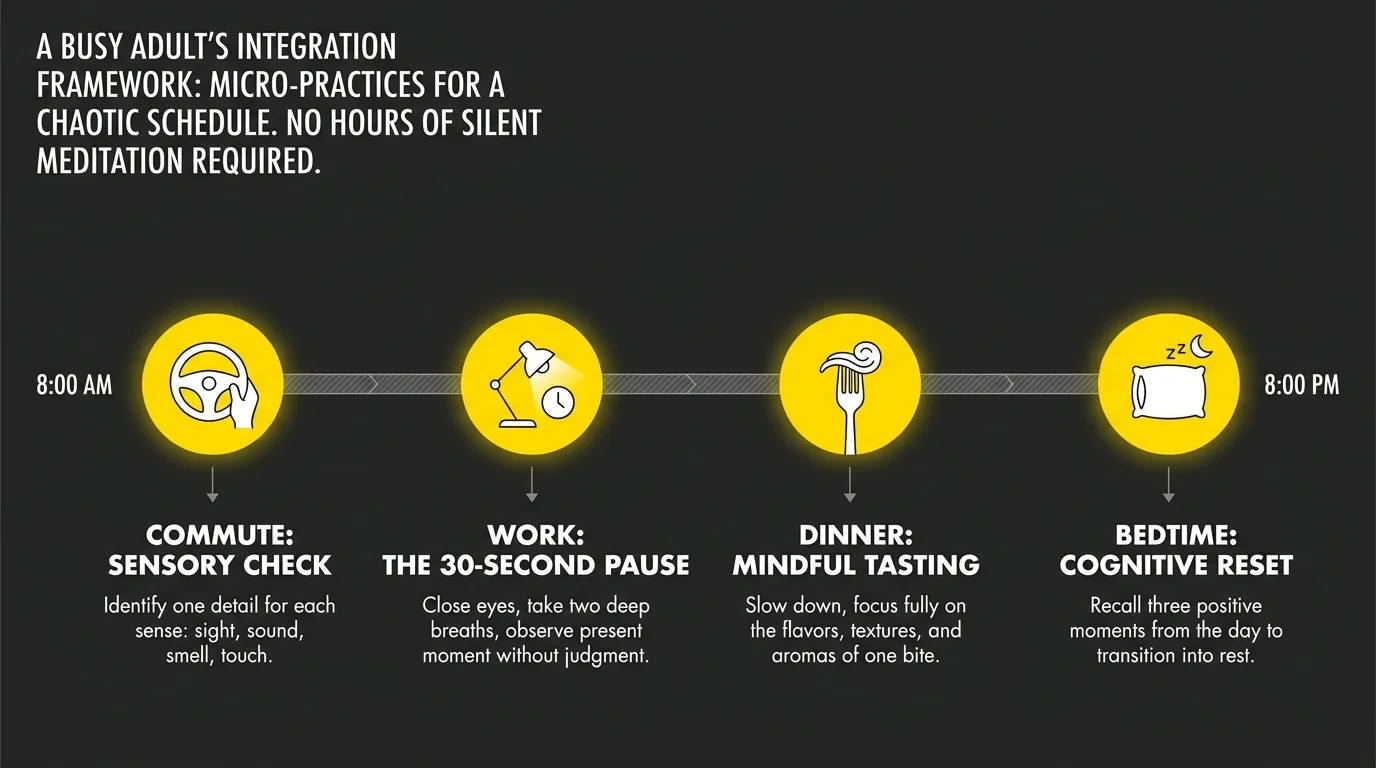
Taking control of your mental landscape does not require hours of silent meditation on a cushion. You can integrate these techniques directly into your chaotic schedule. By stripping away the esoteric baggage, you uncover a straightforward framework for cognitive behavior that fits seamlessly into your daily routine.
The Science Behind Your Mental Loops
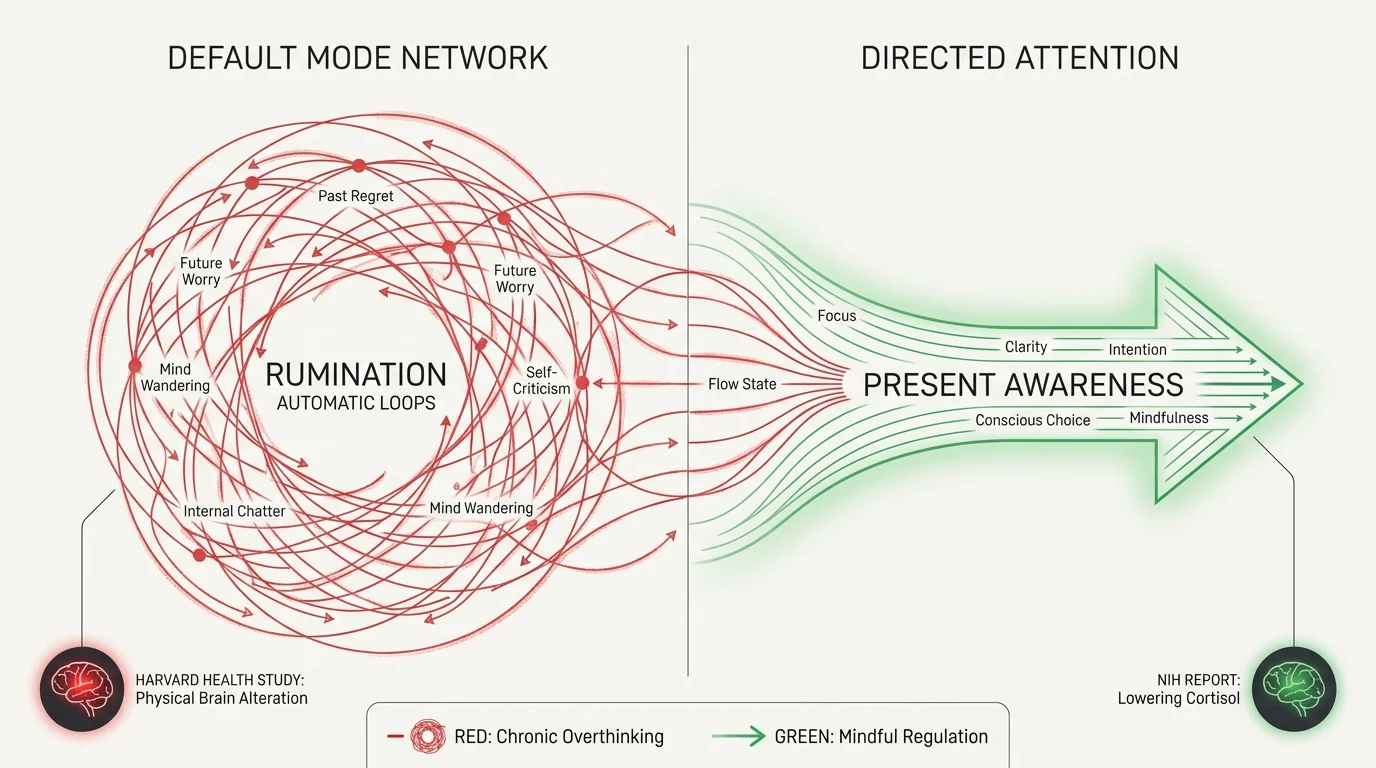
Understanding why your brain fixates on negative scenarios can significantly reduce the shame associated with overthinking. Neurologists point to a specific network in the brain responsible for our internal monologues and daydreaming. When you find yourself stuck in a loop of regret or worry, you are essentially trapped in your brain’s default mode.
Research consistently demonstrates that directed attention can disrupt this automatic rumination. According to a study from Harvard Health, regular mindfulness practice physically alters the brain regions associated with memory, sense of self, and emotional regulation. You can literally rewire your neural pathways to favor calm observation over frantic analysis.
Chronic overthinking also triggers a cascade of physical stress responses. Your body releases cortisol and adrenaline when you obsess over hypothetical future failures, elevating your heart rate and disrupting your sleep. Information provided by a report from the National Institutes of Health highlights how interrupting these cognitive loops directly lowers systemic inflammation and reduces physical stress markers.
Furthermore, cognitive behavioral specialists emphasize the concept of neuroplasticity—the brain’s ability to form new connections throughout life. Evidence supported by resources from the American Psychological Association suggests that replacing anxious rumination with present-moment awareness weakens the neural circuits that cause overthinking. Every time you pull your focus back from a spiral, you actively build stronger, healthier cognitive habits.
A Practical Daily Integration Framework
Transforming your relationship with your thoughts requires a reliable, repeatable structure. You can use a straightforward three-step method to dismantle overthinking as soon as it begins. This process consists of pausing, observing, and redirecting your attention.

The Power of the Intentional Pause
The first step involves hitting the brakes the moment you realize you are spiraling. You might notice physical cues first—a tightening in your chest, shallow breathing, or a clenched jaw. When these signals arise, physically stop what you are doing. Take a single, deep breath to interrupt the automatic stress response.
This deliberate pause creates a crucial gap between your thought and your reaction. In this brief window, you reclaim your agency. You step out of the rushing river of anxiety and plant your feet firmly on the riverbank.

Observing Without Immediate Judgment
Once you secure that pause, look at your thoughts objectively. You might mentally state, “I notice I am having the thought that I will fail my presentation.” Phrasing it this way distances your core identity from the passing anxiety. You are the sky; the thoughts are merely the clouds passing through.
Avoid judging yourself for feeling anxious. Criticizing yourself for overthinking only adds a second layer of distress to your original worry. Treat your mind with the same gentle curiosity you would offer a friend who is feeling overwhelmed.

Redirecting to the Present Reality
The final step requires moving your attention back to the tangible world around you. Engage your senses to ground yourself. Notice the texture of your clothing, the sound of the air conditioning, or the temperature of the room. This sensory input forces your brain to process real-time data instead of hypothetical fears.
By engaging your physical senses, you signal to your nervous system that you are currently safe. You can then consciously choose your next small, constructive action. Focus purely on the immediate task directly in front of you.

Real-World Application at the Office
Imagine receiving a vague message from your manager asking for a quick chat later. Your mind immediately forecasts a demotion or a reprimand. Instead of spending the next three hours paralyzed by dread, apply the framework. Pause, take a breath, and name the fear.
Acknowledge that your brain is trying to protect you by anticipating the worst. Then, redirect your focus to the spreadsheet or report on your screen. You cannot control the future meeting, but you retain complete control over your current keystrokes.

Grounding Yourself at Home
Overthinking often strikes when the house finally goes quiet. As you load the dishwasher, you might start replaying an awkward conversation from three years ago. Notice the memory, accept that it feels uncomfortable, and deliberately bring your attention to the warmth of the water on your hands.
Anchor yourself in the tactile sensations of your chores. Smell the dish soap; hear the clinking of the plates. Turning mundane routines into grounding exercises naturally crowds out unnecessary mental chatter.

Overcoming Common Obstacles to Mental Clarity
As you begin applying these techniques, you will inevitably encounter friction. Your brain prefers familiar habits, even when those habits cause distress. Anticipating these roadblocks allows you to navigate them with grace and persistence.
Navigating the Time Crunch
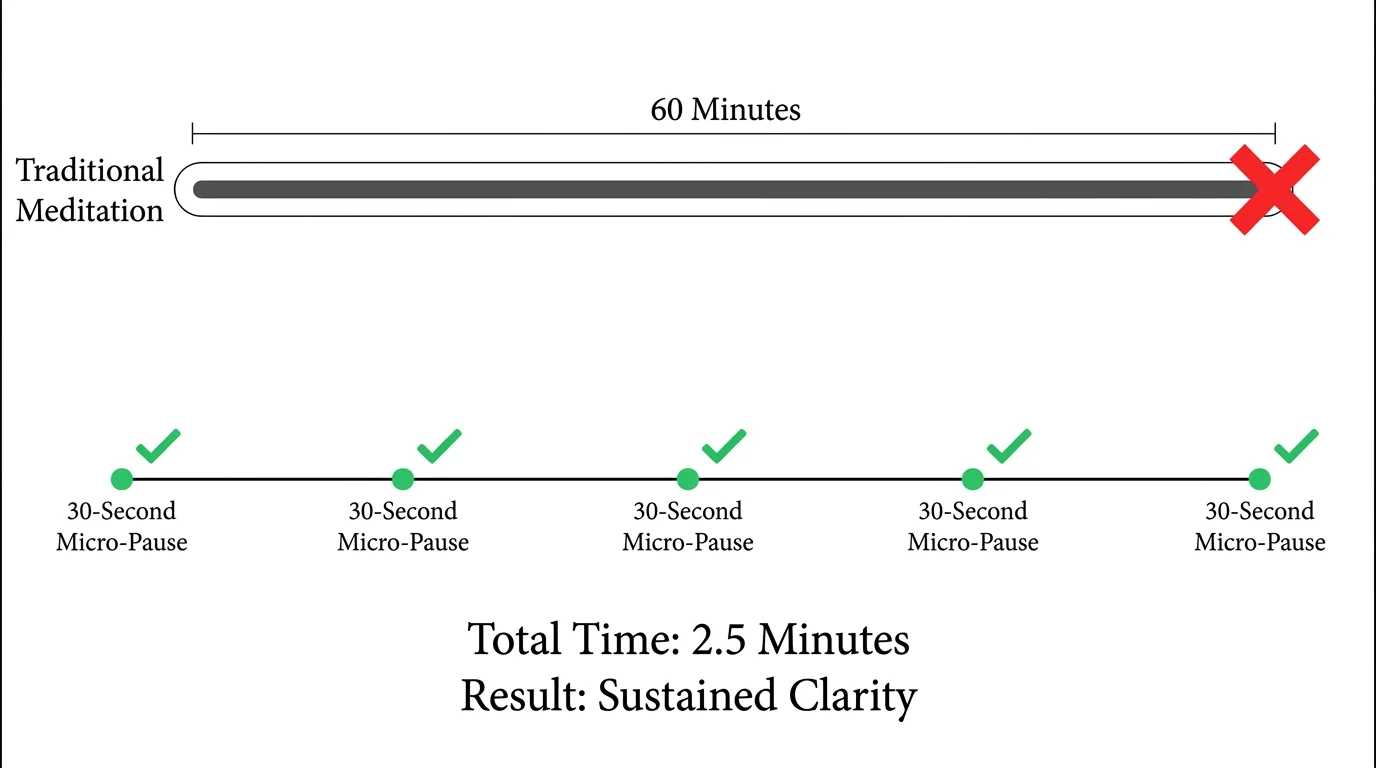
Many busy professionals abandon mindfulness because they believe it requires scheduling thirty-minute meditation sessions. You do not need extra time to practice cognitive awareness. You only need to utilize the micro-moments already built into your day.
Practice grounding yourself while waiting for the elevator, sitting at a red light, or waiting for your coffee to brew. These sixty-second windows provide perfect opportunities to check in with your mental state. Frequent, brief interventions impact your nervous system far more effectively than sporadic, lengthy sessions.

Managing the Wandering Mind
You will likely find that your mind wanders away from the present moment constantly. This does not mean you are failing at the practice. The act of noticing your mind has wandered is, in fact, the very essence of mindfulness.
When your focus drifts back into overthinking, gently guide it back to the present without frustration. Think of it like training a puppy to sit on a mat. You do not yell at the puppy when it wanders off; you simply pick it up and place it back on the mat, over and over again.

Pushing Past Initial Skepticism
Grounding exercises might feel silly or overly simplistic at first. You might doubt that noticing the sound of traffic can actually cure your anxiety about a looming mortgage payment. This skepticism is a natural defense mechanism against trying something vulnerable and new.
Treat the practice as a personal scientific experiment. Commit to using the pause-observe-redirect framework for two straight weeks before evaluating its effectiveness. The cumulative effect of these small cognitive shifts will eventually speak for itself.

Long-Term Benefits of Cognitive Maintenance
Consistent practice transforms these techniques from emergency interventions into a baseline way of living. You gradually stop fighting your mind and start working collaboratively with it. This shift unlocks profound benefits across every area of your life.

Building Emotional Resilience
Emotional resilience does not mean you stop feeling stressed or anxious. It means you recover from those emotions much faster. By short-circuiting your rumination, you prevent temporary setbacks from ruining your entire week.
You learn to process negative feedback or unexpected challenges without internalizing them as personal failures. This robust emotional foundation empowers you to take healthier risks in your career and your relationships. You trust your ability to handle the fallout, whatever it may be.
Enhancing Sustained Focus
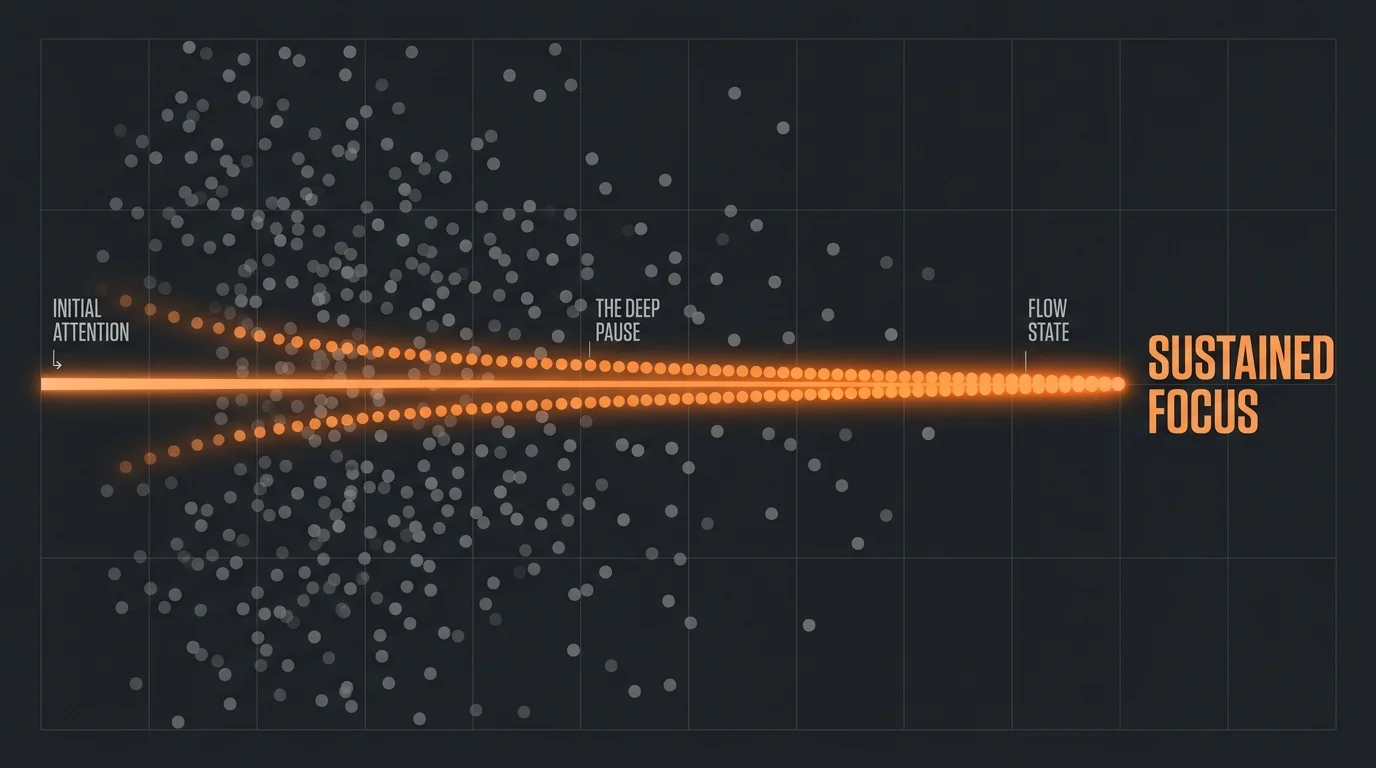
Overthinking acts as a massive drain on your cognitive battery. When you constantly run background processes analyzing past regrets and future fears, you have very little energy left for deep work. Clearing this mental clutter drastically improves your concentration.
You will find yourself able to engage deeply with complex tasks for longer periods. Without the constant interruption of anxious thoughts, your natural creativity and problem-solving abilities rise to the surface. You become more efficient and significantly less exhausted.

Cultivating Holistic Wellbeing
The impact of mental clarity naturally bleeds into your physical health and personal life. You become more present with your family, actively listening to your children or partner instead of nodding along while mentally drafting an email. Your sleep quality improves as the volume of your late-night mental chatter decreases.
Ultimately, overcoming overthinking allows you to actually experience the life you have built. You stop living in a hypothetical future and start inhabiting the reality of your current day. This presence brings a quiet, enduring sense of contentment.
Frequently Asked Questions
How quickly can I expect to see results?
You can experience immediate relief from acute stress the very first time you use a grounding technique. However, permanently rewiring your habitual overthinking takes time. Most people notice a significant, lasting reduction in daily anxiety after about three to four weeks of consistent, intentional practice.
Is overthinking a recognized medical condition?
While overthinking itself is not a formal medical diagnosis, it serves as a primary symptom of several recognized conditions, including Generalized Anxiety Disorder and Obsessive-Compulsive Disorder. If your rumination severely impacts your ability to eat, sleep, or function, reaching out to a licensed therapist or medical professional is a crucial next step.
Can these strategies help with late-night rumination?
Yes. Late-night overthinking happens because the distractions of the day fade away, leaving you alone with your thoughts. Using sensory grounding techniques—like focusing entirely on the physical sensation of the mattress supporting your back or the rhythmic rise and fall of your chest—can guide your brain away from anxious loops and back toward rest.
Do I need to meditate for hours to gain mental clarity?
Absolutely not. Formal meditation is a wonderful tool, but it is not mandatory for overcoming overthinking. Integrating micro-moments of awareness into your existing routine provides exceptional benefits. Focus on consistency and frequency rather than duration.
What if the situation I am overthinking requires an actual solution?
Mindfulness does not replace problem-solving; it enhances it. If a thought keeps recurring, schedule a specific fifteen-minute window to address it practically. Write down concrete action steps. Outside of that scheduled window, use your redirecting techniques to enforce boundaries around the worry.
Embracing a Clearer Mental Landscape
Reclaiming your peace of mind is an ongoing practice, not a one-time achievement. Some days your mind will feel calm and spacious, while other days you might have to actively wrangle your thoughts every ten minutes. Both experiences are completely normal parts of the human condition.
Start small. Choose one specific trigger—perhaps your morning commute or your initial inbox review—and commit to applying the framework only during that time. As you witness the effectiveness of pausing, observing, and redirecting, you will naturally want to expand the practice into other areas of your chaotic day.
Your thoughts only hold the power that you actively give them. You possess the innate ability to shift your focus away from endless worry and back into the vibrant, tangible world around you. Ground yourself in the present moment; it is the only place where true life actually happens.