An Invitation to Presence
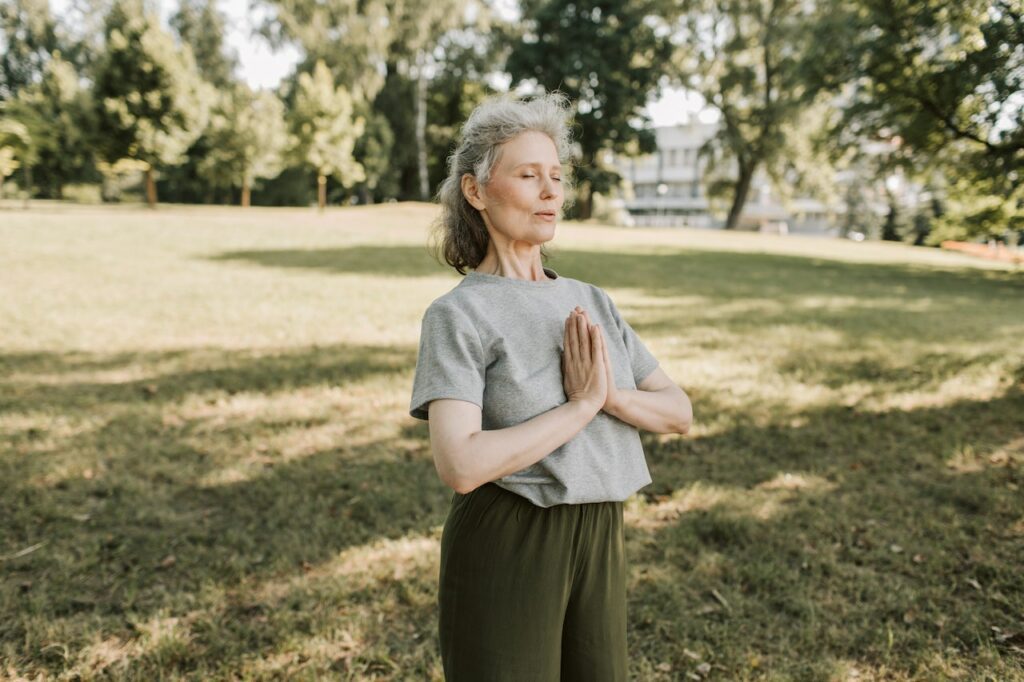
Pause for a single moment before you read any further. Wherever you find yourself sitting right now, allow your shoulders to drop slightly away from your ears. Take a deep, intentional breath in through your nose, noticing the cool sensation of the air filling your lungs; then, exhale slowly through your mouth, letting go of any immediate tension. Feel the solid support of the chair beneath you and the firm ground resting beneath your feet. You have arrived. This exact moment is the only place you ever truly live.
As you navigate the later chapters of life, the natural rhythm of your days inevitably shifts. You might discover that the stressors of your middle years—rushing to meetings, managing a bustling household, or climbing a career ladder—have simply been replaced by new, complex challenges. Stress does not politely retire when you do. Instead, it transforms into health anxieties, shifting identities, the physical realities of an aging body, or the quiet emotional ache of watching your family structure change. When searching for the peace of mind elderly adults deeply deserve, you must recognize that true tranquility does not come from eliminating life’s challenges, but from changing how you relate to them.
This article serves as a gentle map for that journey. By establishing a daily mindfulness routine, you can weave calm awareness into the very fabric of your life. Together, we will explore practical, grounded techniques designed to help you release tension, embrace your current reality with profound kindness, and reclaim your inner peace.
The Foundations of Mindful Awareness
Before diving into specific habits, you must understand the bedrock upon which all mindfulness practices stand. Mindfulness is not about emptying your mind of all thoughts, nor is it a mystical trance. Rather, it is the simple, radical act of paying deliberate attention to the present moment without passing judgment on whatever you find there.
The first foundational principle is non-judgment. Throughout your life, you have likely developed a harsh inner critic. When you experience a memory slip or a physical pain, your immediate reaction might be frustration or self-blame. Mindfulness invites you to observe these moments without attaching a negative story to them. You notice the forgotten name or the aching joint, and you simply say to yourself, “This is happening right now,” without adding, “I am failing,” or “My body is betraying me.”
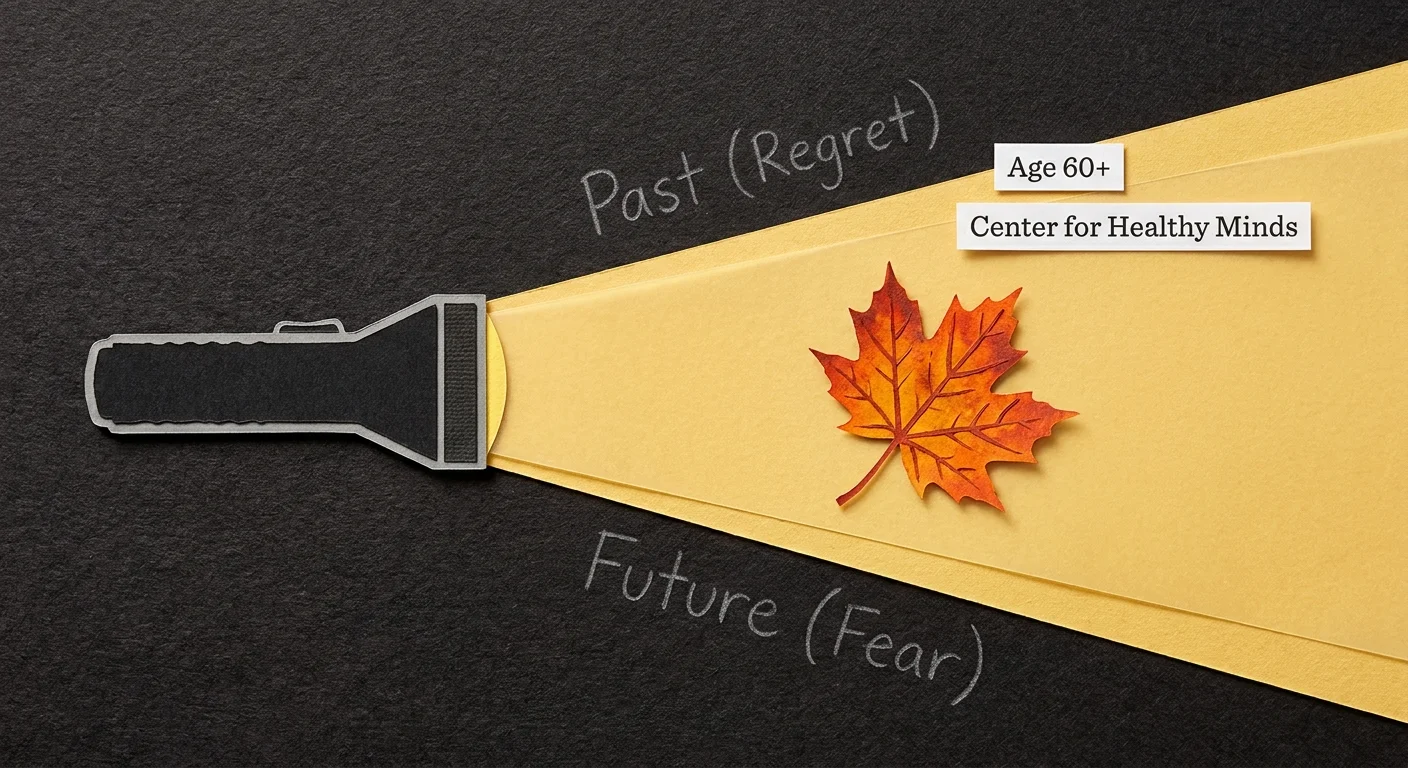
The second principle is directed attention. Think of your awareness as a powerful flashlight. Wherever you point the beam, your reality illuminates. When you focus your flashlight on regrets of the past or fears of the future, stress immediately blossoms in your nervous system. By training your mind to bring that beam of light back to the immediate present, you cultivate a calm mind 60+ and beyond. Extensive research from organizations like the href=”https://centerhealthyminds.org/”>Center for Healthy Minds demonstrates that neuroplasticity—the brain’s ability to form new connections—remains active well into your senior years. You have the full capacity to train your brain toward peace.
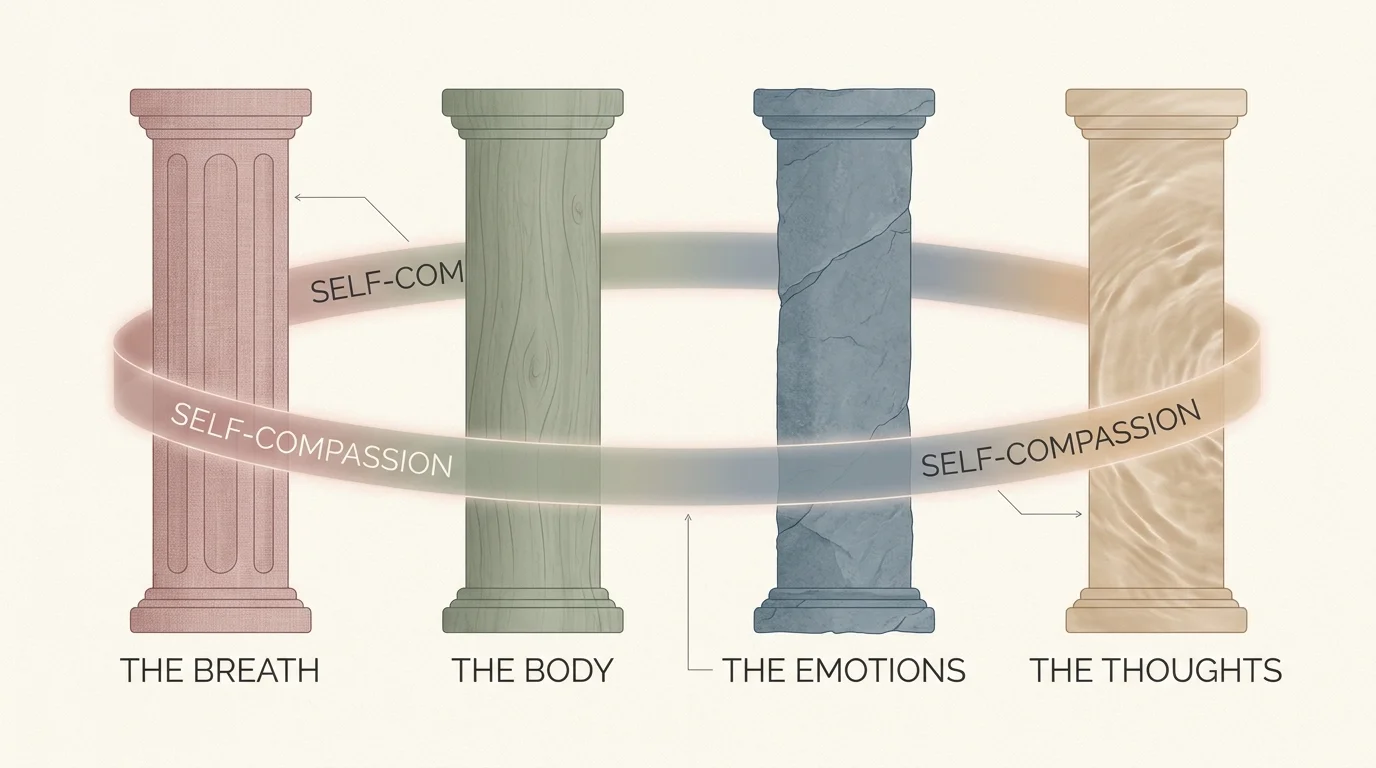
The final foundational principle is deep self-compassion. This is the warm, comforting blanket that wraps around all your practices. Treating yourself with the same gentle grace you would offer a dear friend softens the edges of daily stress and makes lasting emotional balance entirely possible.
The Pillars of Practice
Your journey toward lasting stress reduction relies on four fundamental pillars: your breath, your body, your emotions, and your thoughts. The first four habits correspond directly to these pillars, transforming abstract concepts into actionable stress relief habits you can rely on every single day.
Habit 1: Grounding Through the Anchor of Breath
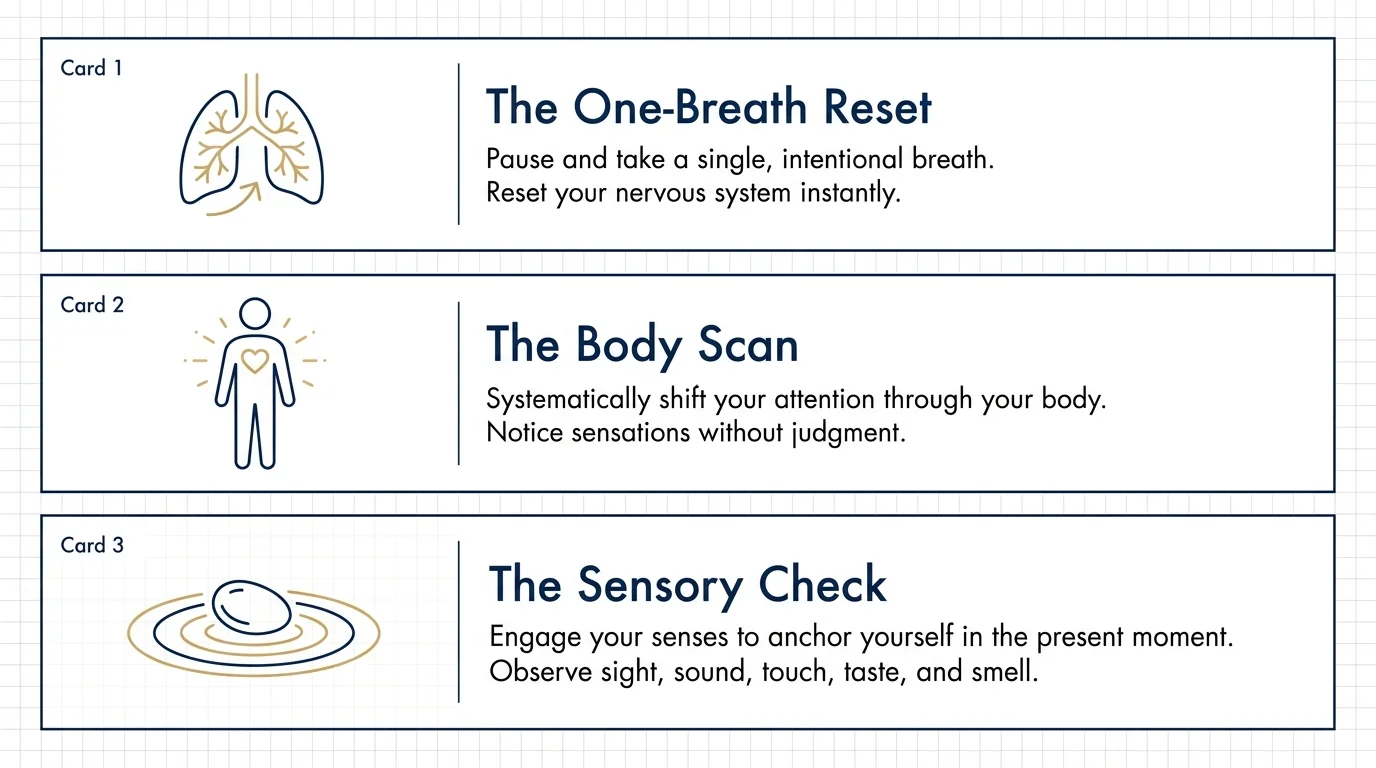
Your breath stands as your most reliable, portable tool for stress reduction. You carry it with you to the grocery store, into doctor’s waiting rooms, and to the quiet edges of your bed when sleep eludes you. When anxiety spikes, your nervous system triggers shallow, rapid breathing, which only signals to your brain that you remain in danger. By consciously altering your breathing pattern, you hack your nervous system and send a direct biological signal that you are safe.
Begin incorporating deliberate breath awareness into your daily life. Several times a day, place one hand gently over your belly. Breathe in slowly through your nose, directing the air deep into your lungs so that your hand rises with the expansion of your stomach. Let the exhale be longer and slower than the inhale. This specific technique—often called diaphragmatic breathing—activates the vagus nerve, immediately lowering your heart rate and easing muscle tension. You do not need twenty minutes of silent meditation to reap the benefits; three deep, conscious breaths can entirely shift the trajectory of your afternoon.
Habit 2: Conducting Compassionate Body Scans
Aging inevitably introduces new physical sensations, many of which involve discomfort or limited mobility. Your natural instinct dictates that you fight pain, tense up around it, or attempt to distract yourself from it entirely. Unfortunately, this physical resistance generates a secondary layer of stress that often hurts more than the original physical issue.
The body scan habit teaches you to inhabit your physical form with kindness. Once a day, either lying down or sitting comfortably, bring your directed attention to your toes. Notice whatever sensations exist there—warmth, coolness, tingling, or even a lack of sensation. Slowly sweep that beam of awareness up through your feet, ankles, calves, and knees. When you encounter a region of your body that holds pain, do not immediately rush past it. Instead, breathe into it. Imagine sending a wave of warm, soothing air directly to that joint or muscle. If the pain feels too intense, gently guide your focus to a neutral part of your body, like the palms of your hands or the tip of your nose. Through the practice of mindfulness, seniors discover that they can coexist peacefully with physical changes without letting those changes dictate their emotional state.
Habit 3: Observing Emotions Like Weather Patterns
The senior years offer a complex emotional landscape. You might experience profound joy while watching grandchildren grow, intertwined with heavy grief for friends who have passed or deep nostalgia for earlier decades. Stress often builds because you either suppress uncomfortable feelings or become entirely overwhelmed by them.
Adopt the habit of viewing your emotions as weather patterns passing through the vast sky of your awareness. You are the sky; the emotion is merely a passing thunderstorm. When a strong feeling arises—perhaps a wave of loneliness on a quiet Sunday afternoon—do not immediately turn on the television to drown it out. Pause and locate where the emotion lives in your body. Does loneliness feel like a heaviness in your chest? Does anxiety manifest as a flutter in your stomach? By simply identifying and feeling the physical signature of the emotion, you strip away its overwhelming power. Say to yourself, “I am experiencing a moment of sadness, and that is entirely okay.” The weather will eventually shift.
Habit 4: Cultivating Non-Judgmental Thought Awareness
Your mind operates as a relentless thought-generating machine. It produces worries about health tests, replays conversations from three decades ago, and drafts detailed catastrophic scenarios that will likely never occur. You cannot stop your mind from generating thoughts; attempting to do so is like trying to stop the wind with your bare hands. You can, however, change how you react to those thoughts.
Practice mental noting. When you sit quietly and realize your mind has wandered into a labyrinth of stressful future planning, simply label the activity. Mentally whisper the word “planning” or “worrying” to yourself. By naming the cognitive process, you instantly create distance between you and the thought. You realize that you are the silent observer watching the thought, not the thought itself. This simple habit prevents you from spiraling down the rabbit hole of anxiety, allowing you to gently unhook your attention and return it to the steady rhythm of your breathing.
Integrating Mindfulness into Your Daily Life
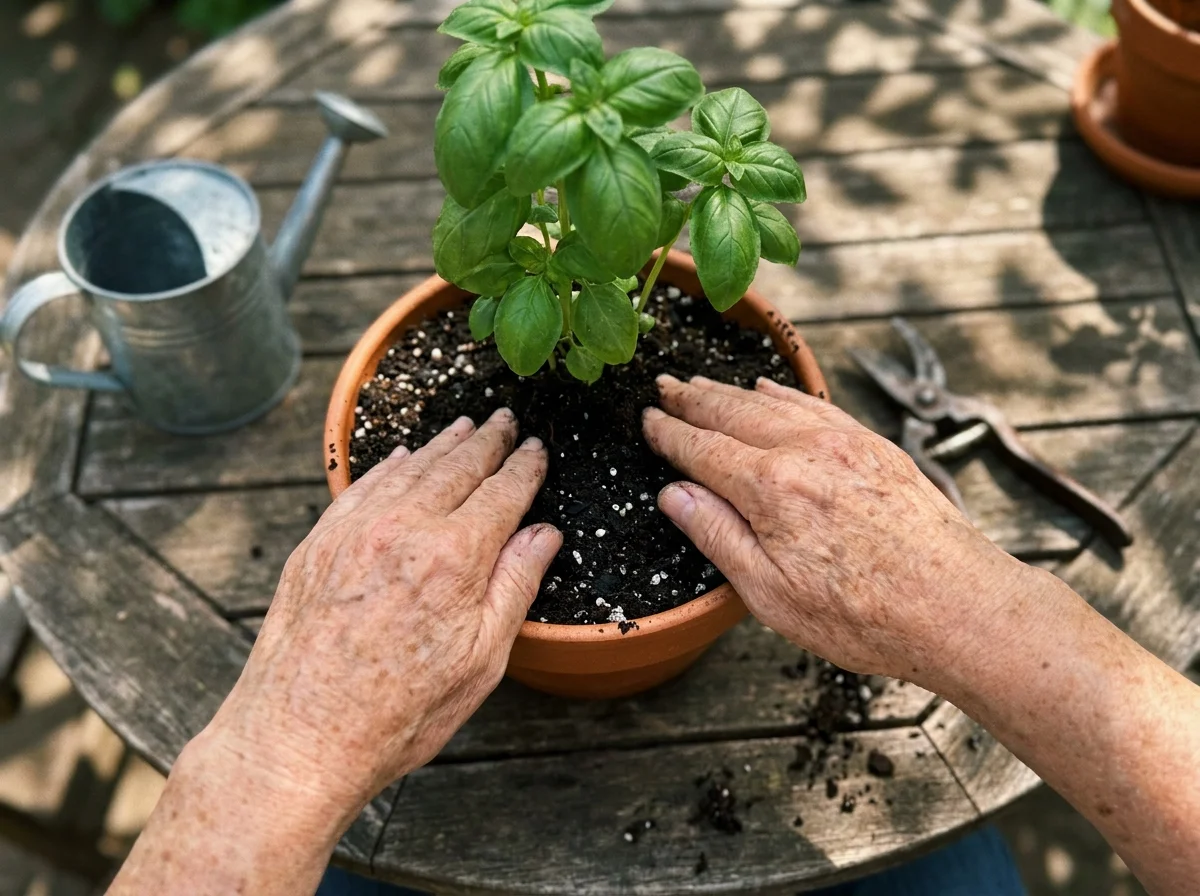
Mindfulness must not remain confined to a quiet room or a special cushion. True peace emerges when you actively weave these practices into the tangible reality of your everyday existence. The next two habits focus on how you interact with your environment and the people around you.
Habit 5: Pacing Your Daily Rhythms and Meaningful Work
Even in retirement, your days are likely filled with activities—volunteering at a local charity, tending to an expansive garden, managing household chores, or caring for family members. The modern world conditioned you to prize efficiency, multi-tasking, and rushing. Continuing this frantic pace into your senior years creates unnecessary mental and physical exhaustion.
Embrace the habit of single-tasking. When you wash the dishes, focus entirely on the temperature of the water, the scent of the soap, and the smooth surface of the plates. Refuse the urge to mentally plan tomorrow’s errands while your hands work today’s chores. Furthermore, honor your fluctuating energy levels by building intentional pauses into your schedule. Treat a ten-minute rest on the porch not as a sign of weakness, but as a deliberate act of mindful restoration. Moving through your daily tasks with deliberate slowness and full presence drastically reduces the chronic stress born of perpetual rushing.
Habit 6: Practicing Deep Listening in Relationships
Social connections play an essential role in your overall well-being. Researchers at the href=”https://greatergood.berkeley.edu/”>Greater Good Science Center at UC Berkeley continually highlight how strong relational bonds protect against cognitive decline and emotional distress. However, genuine connection requires profound presence.
Cultivate the habit of mindful, deep listening. When conversing with a spouse, a friend, or a grandchild, give them the pure gift of your undivided attention. Set aside your phone, turn off the television, and look directly at them. Notice the instinct to formulate your response or offer unsolicited advice while they are still speaking. Gently let go of that instinct and simply absorb their words, their tone, and their facial expressions. By listening mindfully, you foster deeper, more authentic connections, which act as a powerful buffer against the isolation and loneliness that sometimes accompany later life.
The Micro-Practices Library
You do not need massive blocks of free time to cultivate awareness. The most profound transformations often occur in the smallest, seemingly insignificant moments of your day. By embracing quick, accessible practices, you build a resilient nervous system over time.
Habit 7: Engaging in Micro-Practices During Transitions
Transitional moments—the spaces between activities—serve as perfect opportunities to reset your nervous system. Consider your morning routine. As you wait for your coffee or tea to brew, do not stare blankly at the clock or fret about the news. Instead, stand flat on your feet, feel the floor beneath you, and listen intently to the sound of the water boiling. Inhale the aroma deeply. This transforms a mundane two-minute wait into a restorative sensory experience.
You can apply this same transitional awareness throughout your day. Before you turn the key in the ignition of your car, pause. Take one deep breath and actively release the tension in your jaw and shoulders. When you walk from the kitchen to the living room, notice the exact sensation of your feet lifting and landing on the floorboards. When you sit down to eat a meal, take a moment to express silent gratitude for the food, and chew your first bite with total attention to its texture and flavor. These tiny droplets of mindfulness eventually fill an entire ocean of calm within your mind.
Measuring Progress Without Judgment
In our goal-oriented society, you might naturally wonder how to measure your success in mindfulness. You must resist the urge to grade yourself. Progress in mindful awareness is rarely linear, and it certainly does not mean you will never feel stressed again. The true metric of success lies in your recovery time.
Notice how quickly you bounce back after a frustrating event. A year ago, a delayed doctor’s appointment might have ruined your entire afternoon; today, you might notice the frustration, take three deep breaths, and let it go. Pay attention to how often you spontaneously notice beauty—a vivid sunset, the sound of a bird, or the comforting weight of a blanket—without prompting. These subtle shifts indicate profound rewiring in your brain. For further guidance on tracking your emotional resilience, you can explore the extensive resources provided by href=”https://www.mindful.org/”>Mindful.org, which offers excellent insights into the long-term benefits of sustained practice. Keep a small notebook by your bed and jot down one moment of pure presence you experienced each day. Over time, you will see a clear, undeniable pattern of growing peace.
Frequently Asked Questions About Senior Mindfulness
How do I start if I have absolutely never meditated before?
Begin exactly where you are, using the smallest possible time commitment. You do not need to read a stack of books or buy special equipment. Start by dedicating just two minutes every morning to sitting quietly and feeling your breath. By keeping the barrier to entry remarkably low, you build consistency without triggering performance anxiety. Let the practice grow naturally as you become more comfortable with sitting in silence.
What should I do if physical pain makes sitting perfectly still too difficult?
You absolutely do not need to sit in a rigid, cross-legged posture on the floor. Mindfulness meets you in whatever physical condition you currently experience. You can practice while sitting in a supportive recliner, lying flat in bed, or gently walking around your living room. If traditional stillness aggravates your joints, embrace mindful movement, such as gentle stretching or slow walking, allowing the movement itself to become the anchor for your attention.
How long does it typically take to notice a reduction in daily stress?
While you may experience an immediate, temporary sense of calm after taking a few deep breaths, the profound structural changes to your stress response usually take a few weeks of consistent practice to manifest. Think of mindfulness like tending a garden; you do not plant a seed on Monday and expect a full bloom on Tuesday. However, with gentle, daily watering, you will suddenly realize one day that you are responding to life’s inevitable challenges with a steady, grounded grace you previously lacked.
Is it normal to feel slightly more anxious when I first start paying attention to my thoughts?
Yes, this represents a highly common and completely normal experience. When you finally turn on the lights in a cluttered room, the mess suddenly looks overwhelming. You are not generating more anxious thoughts; you are simply noticing the thoughts that have been running in the background all along. When this happens, anchor yourself firmly in your physical body. Focus intensely on the sensation of your feet on the floor or wash your hands with warm water, using the physical sensation to draw your mind away from the cognitive clutter.
A Final Reflection
Mindfulness is not a destination you reach, but a lifelong companion that walks quietly beside you. As you integrate these habits into your daily routine, remember to treat yourself with boundless patience. Some days your mind will feel as clear as a glassy lake, and other days it will resemble a stormy sea. Both experiences are completely valid parts of the human journey.
Carry this simple affirmation with you into the rest of your week: “In this moment, I have everything I need, and I am entirely safe.” Take one more deep, intentional breath before you close this page. Exhale completely, releasing any remaining tension into the air around you. Step forward into your day with a grounded heart and an awakened, peaceful mind.