You can completely reset a stressful day and improve your mood in less time than it takes to brew a cup of coffee. The secret lies not in dramatic life overhauls, but in micro-adjustments to your routine that signal safety and calm to your nervous system. Picture yourself staring at a glowing screen with an overflowing inbox; your shoulders are tense, and your breathing is shallow. Instead of letting that anxiety dictate your afternoon, you have the immediate power to intervene. Embracing tiny, realistic practices allows you to bypass overwhelm and reclaim your mental bandwidth. These small shifts provide an accessible path to feeling lighter, more focused, and genuinely resilient.
What Mindfulness Means in This Context
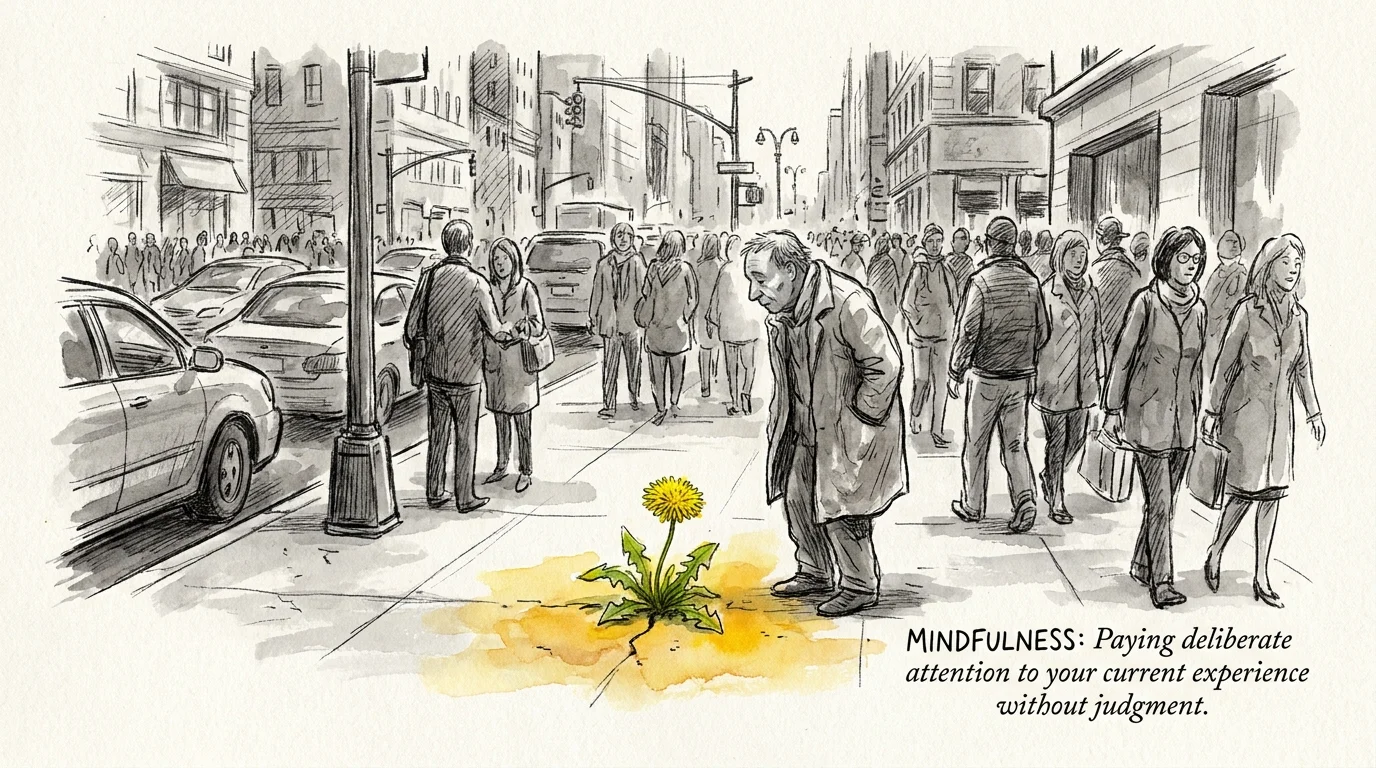
People often imagine mindfulness requires an hour of absolute silence, a meditation cushion, and a mind completely devoid of thought. This misconception keeps many busy adults from ever experiencing the practical benefits of the practice. In reality, mindfulness is simply the act of paying deliberate attention to your current experience without judgment. It means noticing that your jaw is clenched during a difficult meeting and consciously choosing to relax it. It involves recognizing when your mind has wandered to tomorrow’s deadlines and gently steering your focus back to the task directly in front of you.
When you strip away the mystical associations, mindfulness becomes a highly functional tool for managing the everyday friction of modern life. You do not need an empty schedule to practice it; you only need a willingness to pause. By creating tiny gaps between a stressful trigger and your automatic reaction, you give your brain a chance to choose a healthier response. This proactive approach prevents minor annoyances from snowballing into day-ruining moods.
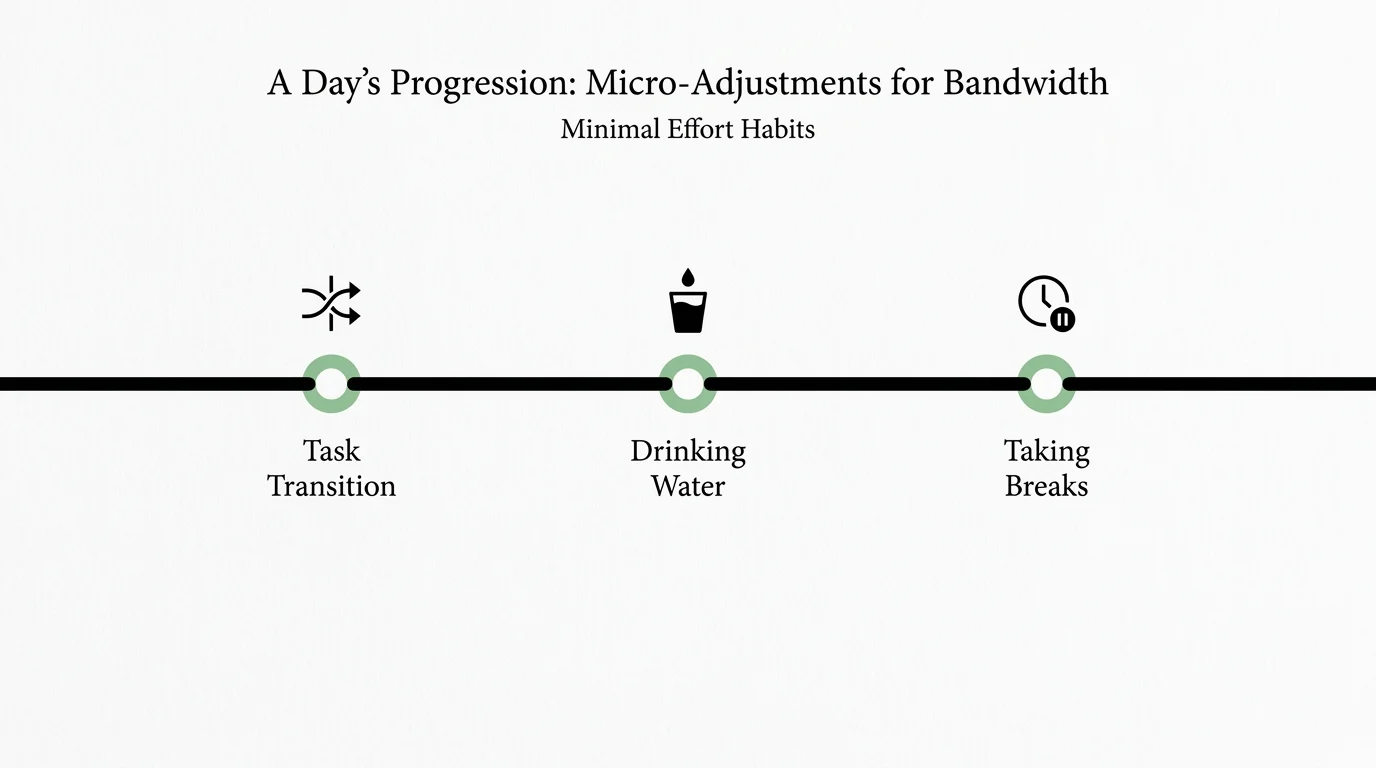
Integrating these moments of awareness into your existing routine requires minimal effort but delivers substantial rewards. You already transition between tasks, drink water, and take breaks. Layering mindfulness over these natural daily rhythms allows you to build emotional resilience without adding another chore to your extensive to-do list. The goal is to live your life exactly as you do now, just with slightly more intention and presence.
The Science Snapshot
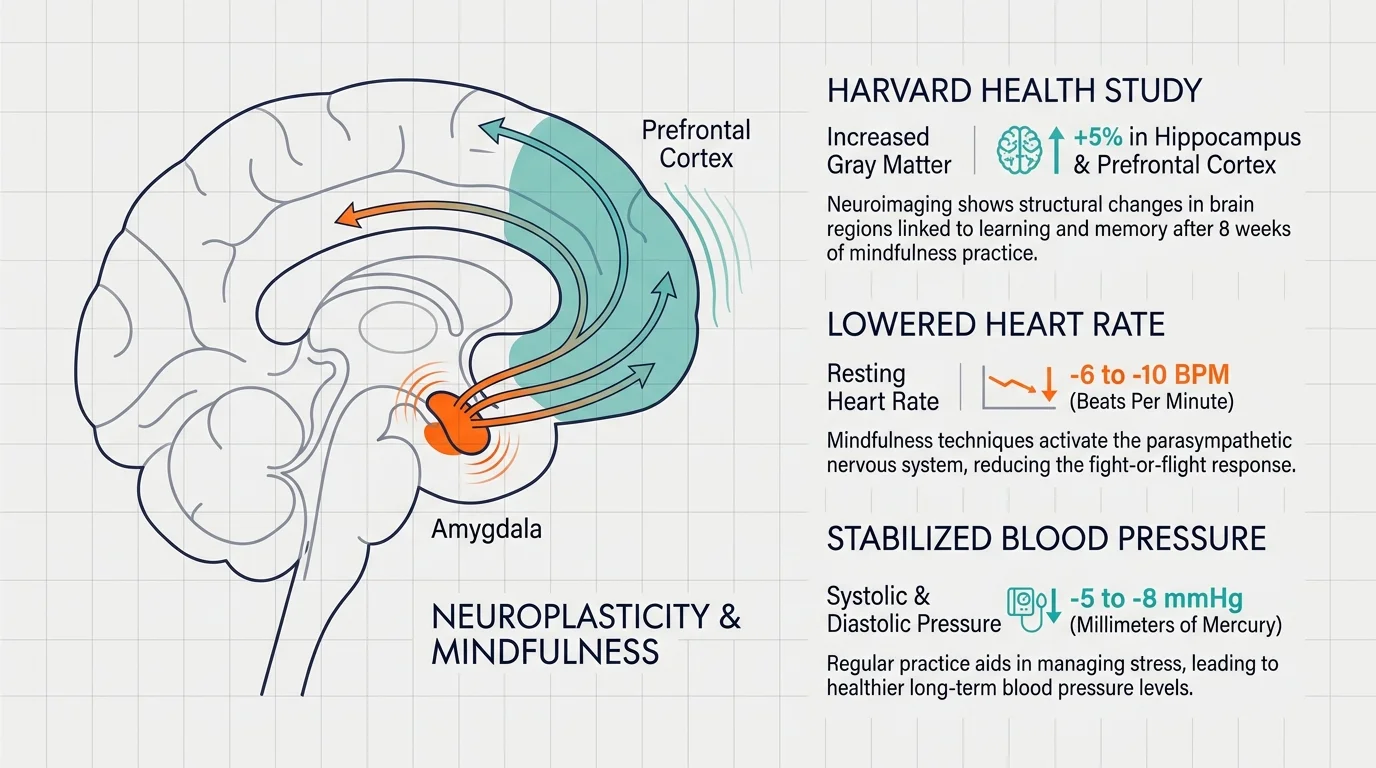
Modern neuroscience provides compelling evidence that you can actively reshape your brain’s response to stress through deliberate repetition. When you feel overwhelmed, your amygdala—the brain’s threat detection center—floods your body with cortisol and adrenaline. This physiological response served our ancestors well in life-or-death situations, but it proves incredibly counterproductive when triggered by an abrasive email or a traffic jam. Engaging in brief mindfulness exercises acts as a biological circuit breaker, halting the production of stress hormones and engaging your parasympathetic nervous system.
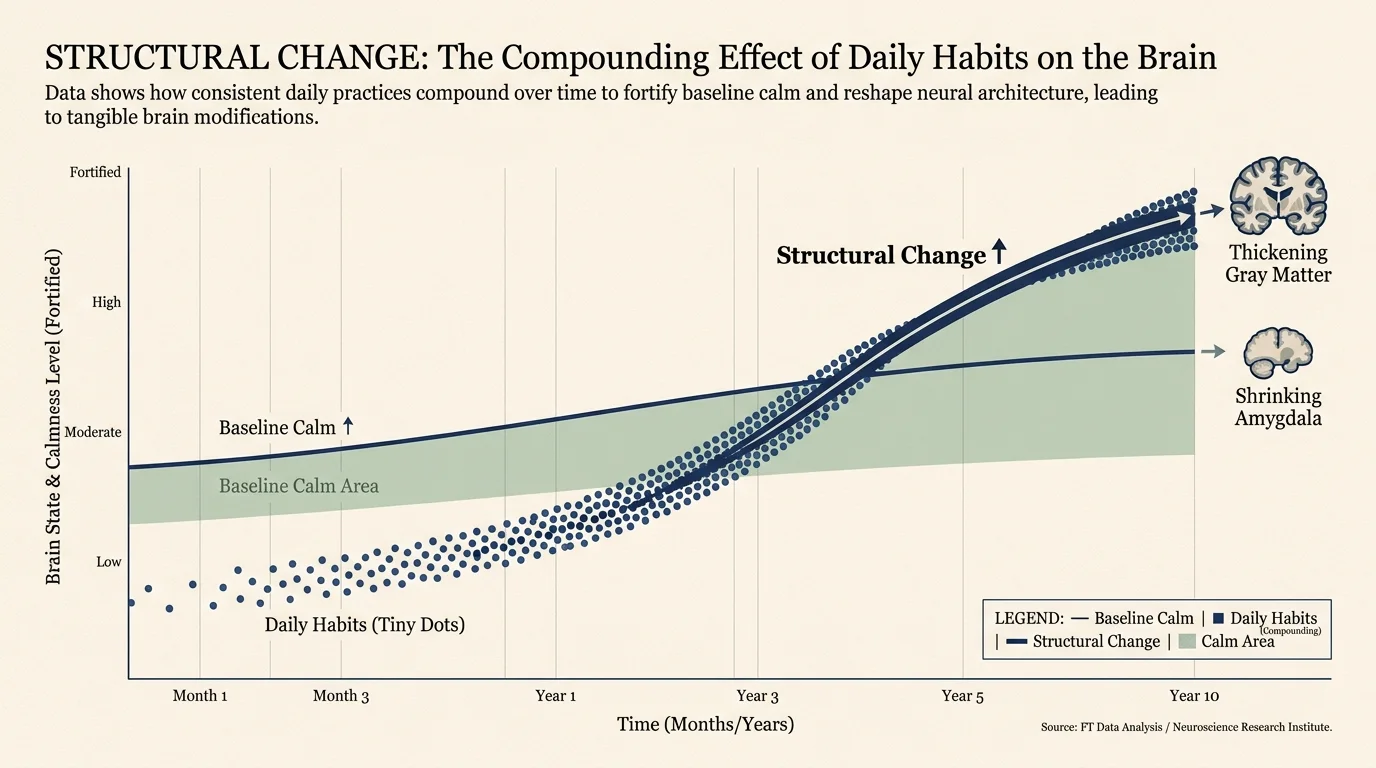
Taking just a few moments to center yourself shifts your brain activity from the reactive amygdala to the prefrontal cortex, the area responsible for logical thinking and emotional regulation. According to a study from Harvard Health, regular mindfulness practices literally change the gray matter in your brain, thickening the regions associated with learning and memory while shrinking the amygdala. This structural change means that over time, your baseline state becomes significantly calmer, and you recover from stressful incidents much faster.
You do not need to wait months to feel these effects. Researchers emphasize that even micro-doses of intentional focus yield immediate physiological benefits. Blood pressure lowers, heart rate stabilizes, and muscular tension dissipates within seconds of initiating a mindful pause. Consistent application of these tiny interventions creates a compounding effect, fortifying your mental architecture against the inevitable pressures of your week.
The Daily Integration Framework
Building a mindful life does not require carving out massive blocks of free time. Instead, it relies on a simple framework of pausing, observing, and responding. You can weave the following eight tiny habits into the fabric of your day, utilizing them as anchors whenever you feel your mood slipping or your stress rising. Treat these practices as an emergency toolkit for your nervous system.
Habit 1: The Three-Breath Pause
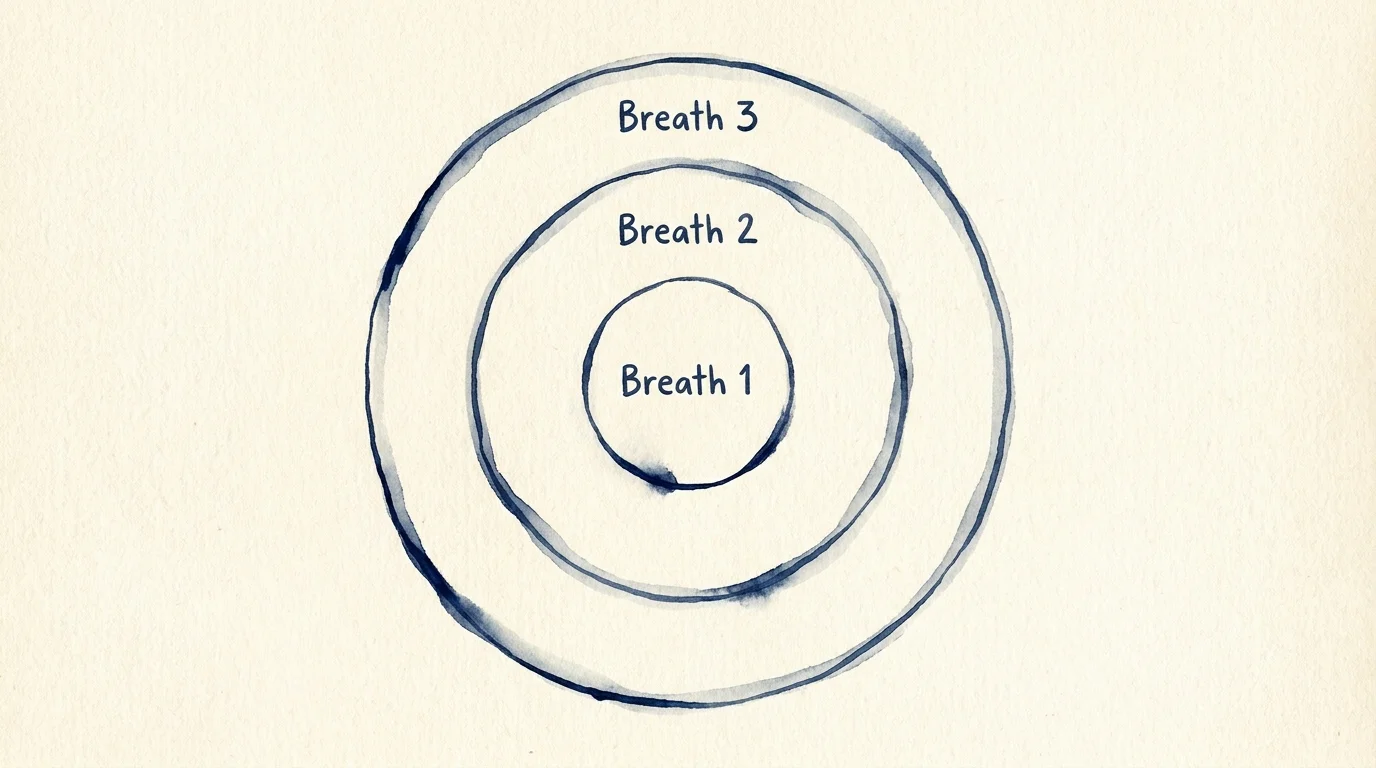
Your breath serves as the most immediate and accessible bridge between your mind and body. When anxiety spikes, your breathing naturally becomes rapid and shallow, which signals to your brain that you are in danger. You can reverse-engineer this loop by taking conscious control of your respiration. Before opening a daunting email or walking into a high-stakes meeting, stop and take three deliberate breaths. Inhale deeply through your nose, expanding your stomach, and exhale slowly through your mouth. Prolonging the exhale directly stimulates the vagus nerve, immediately lowering your heart rate and inducing a state of calm.
This practice requires less than thirty seconds, yet it drastically alters your physiological state. You can perform it anywhere—at your desk, in the car, or while standing in line at the grocery store. Making the three-breath pause your default response to tension prevents minor stressors from accumulating in your body throughout the day.

Habit 2: Sensory Grounding
Anxiety thrives on future-tripping; it pulls your attention away from the present moment and traps you in worst-case scenarios. Sensory grounding forces your brain to process immediate environmental data, effectively short-circuiting the anxiety loop. When you feel your mind racing, pause and identify three distinct things you can see around you. Notice the specific shade of a nearby plant, the texture of your wooden desk, or the way the light filters through the window.
Next, focus your hearing and pick out two sounds you might normally ignore, like the hum of the refrigerator or distant traffic. Finally, zero in on one physical sensation, such as the weight of your feet against the floor or the fabric of your shirt against your skin. By overloading your working memory with sensory details, you push out the hypothetical worries and return your focus to the physical reality of the present moment.
Habit 3: The Mindful Transition
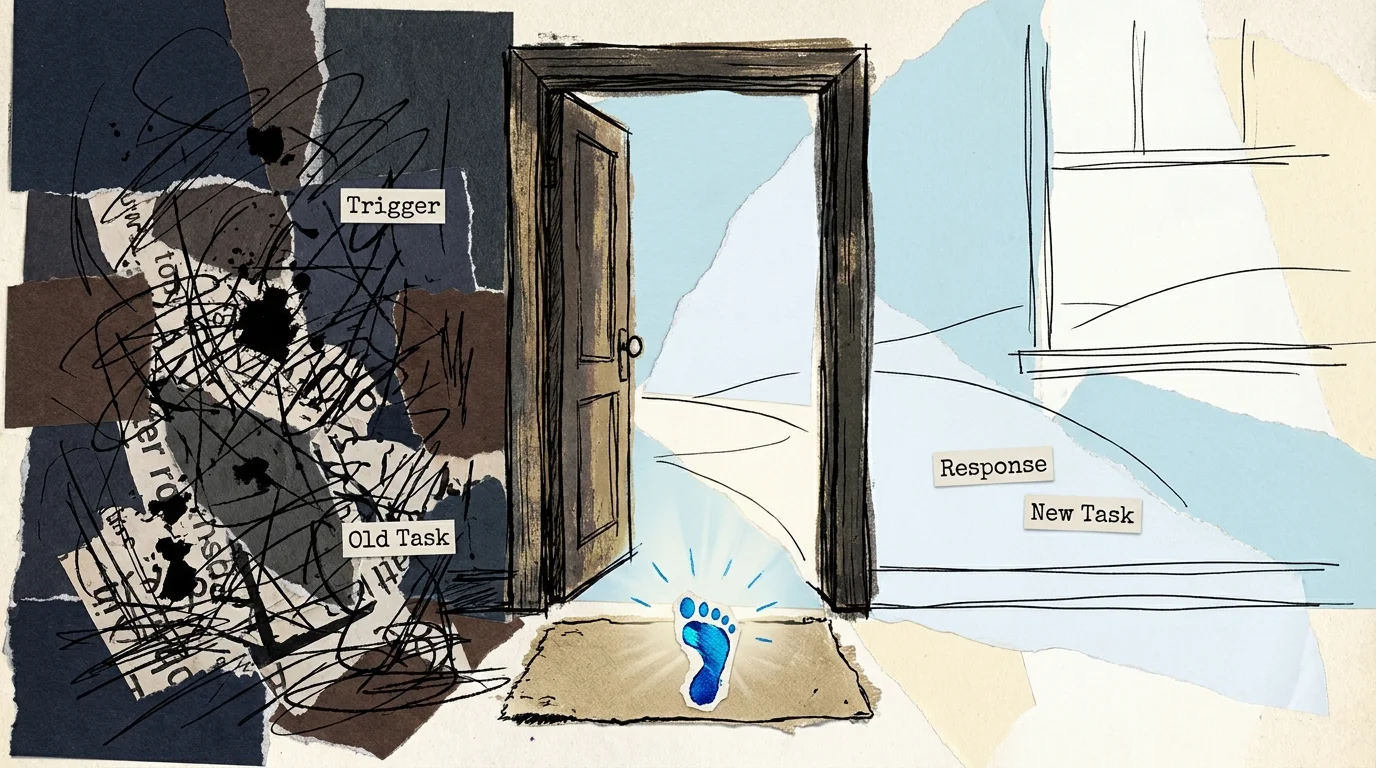
Many busy adults carry the emotional residue of one task directly into the next. You finish a frustrating phone call and instantly drag that irritation into a conversation with your partner. Establishing a mindful transition acts as a mental palate cleanser between activities. When you close your laptop for the evening, do not immediately rush to the kitchen to start cooking. Sit in your chair for ten seconds.
Acknowledge that the work portion of your day has concluded. Visualize physically setting aside the problems you were just solving. As you stand up, set an intention for the next phase of your day—decide to be present, patient, or simply relaxed. This tiny boundary prevents your professional stress from contaminating your personal time, significantly improving your mood during the evening.

Habit 4: Micro-Gratitude Scanning
Your brain possesses a natural negativity bias; it evolved to scan the environment for threats and dwell on problems. This biological quirk means you will easily remember a single critical comment while completely forgetting five compliments. To counteract this tendency, you must actively train your brain to notice positive stimuli. Micro-gratitude scanning involves intentionally searching your immediate environment for tiny things to appreciate.
You do not need to reflect on grand, profound blessings. Instead, focus on the perfect temperature of your morning coffee, the comfortable support of your chair, or the convenience of a hot shower. Acknowledging these minor comforts triggers the release of dopamine and serotonin, the neurotransmitters responsible for feelings of happiness and well-being. Practicing this habit transforms your perspective, making you more resilient to daily frustrations.

Habit 5: Single-Tasking Intervals
Modern work culture glorifies multitasking, yet attempting to do several things at once severely degrades your cognitive performance and spikes your anxiety. Every time you switch your attention from a spreadsheet to a text message, your brain incurs a cognitive switching penalty. This constant fragmentation of focus leaves you feeling exhausted, irritable, and chronically behind schedule. Embracing single-tasking intervals restores your mental clarity and significantly lowers your daily stress levels.
Choose a specific window of time—even just fifteen minutes—to dedicate entirely to one objective. Close all unrelated browser tabs, silence your phone, and immerse yourself fully in the work at hand. Notice the resistance your mind puts up when it craves distraction, and gently guide your focus back to the task. Working with singular intention not only improves the quality of your output but also creates a deep sense of calm and accomplishment.

Habit 6: The Posture Reset
The connection between your body and your mind operates as a two-way street. While your emotions influence your physical posture, your physical posture equally dictates your emotional state. Slumping over a keyboard for eight hours compresses your chest, restricts your breathing, and subtly signals to your brain that you are in a defensive, defeated position. Correcting your alignment offers an instant mood boost.
Set a subtle reminder to check your posture throughout the day. Roll your shoulders back and down, lift your chin, and open your chest. This expansive posture facilitates deeper breathing and decreases the concentration of cortisol in your bloodstream. Standing tall physically tricks your brain into feeling more confident, alert, and capable of handling challenges.

Habit 7: Mindful Hydration
Most people consume water mindlessly while staring at screens or rushing between errands. Transforming this mundane necessity into a mindful habit provides you with a built-in pause button multiple times a day. When you reach for your glass of water, stop and give the action your complete attention. Feel the weight and temperature of the glass in your hand.
As you take a sip, notice the sensation of the water moving past your lips and down your throat. Observe the cool, refreshing feeling it leaves behind. This brief moment of physical awareness pulls you out of your cognitive loops and grounds you firmly in your body. It acts as a miniature reset, washing away lingering mental fatigue alongside physical thirst.

Habit 8: The Evening Wind-Down
The quality of your tomorrow depends heavily on how you end your today. Scrolling through stressful news feeds or answering emails right before bed keeps your nervous system in a state of high alert, sabotaging your sleep architecture and guaranteeing a sour mood the next morning. Creating a deliberate evening wind-down routine signals to your brain that the time for productivity has passed and the time for restoration has arrived.
Thirty minutes before you plan to sleep, physically distance yourself from your electronic devices. Dim the overhead lights to encourage melatonin production. Engage in a calming analog activity, such as reading a physical book, stretching gently, or writing down your thoughts in a journal. This intentional deceleration lowers your heart rate, quietens your mind, and ensures you wake up feeling refreshed and emotionally stable.
Obstacles and Grounded Solutions
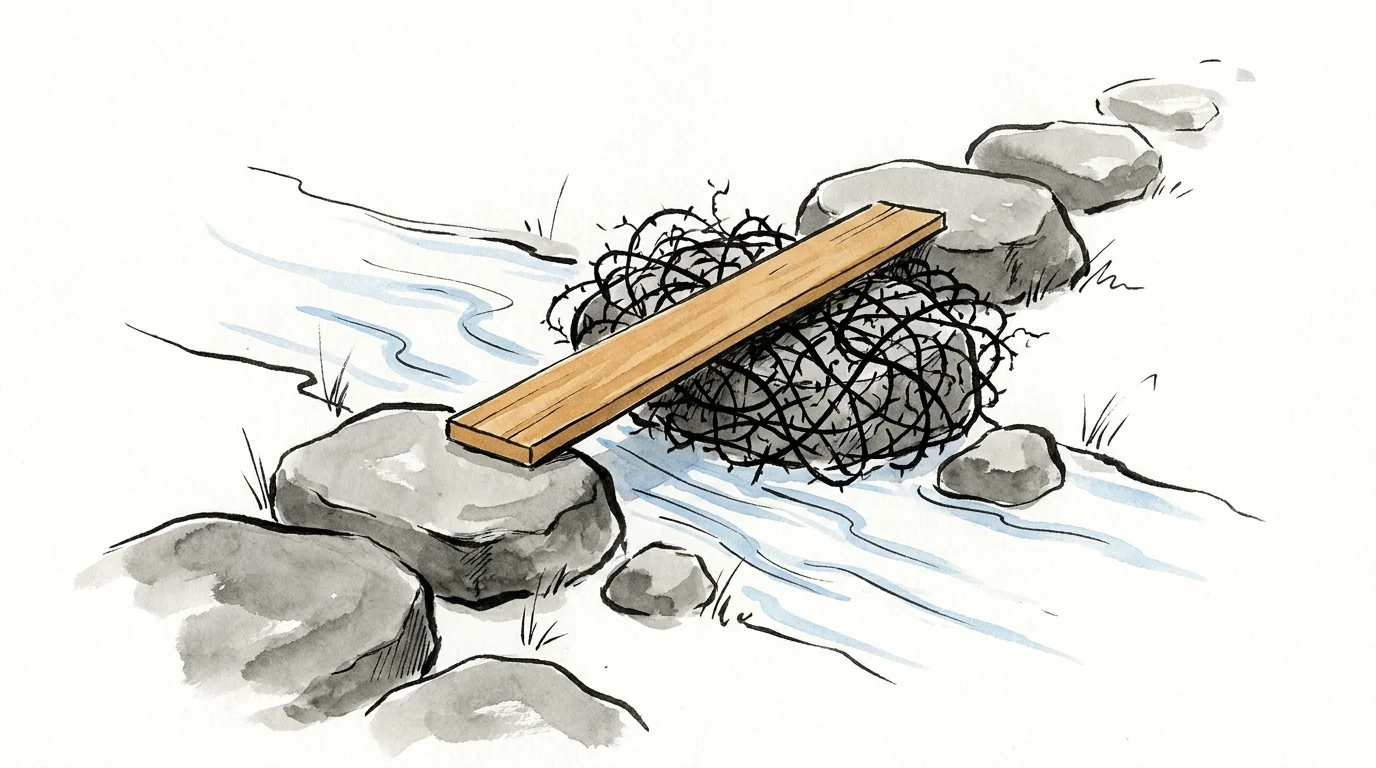
Despite the simplicity of these habits, you will inevitably encounter friction when trying to adopt them. The most common barrier is the perception that you simply do not have enough time. When your schedule is packed back-to-back, pausing for even thirty seconds can feel like an impossible luxury. To overcome this, attach your new mindfulness habits to actions you already perform automatically. Practice sensory grounding while brushing your teeth, or execute the three-breath pause while your computer turns on. This technique, known as habit stacking, requires zero extra time in your day.
Another frequent obstacle involves dealing with a relentlessly wandering mind. When you attempt a single-tasking interval, you might find your thoughts aggressively drifting toward unfinished chores or financial worries. Many people interpret this as failing at mindfulness and subsequently quit. Understand that noticing your mind has wandered is actually the core metric of success; the realization itself is a moment of pure mindfulness. Simply acknowledge the distraction without self-criticism and steer your attention back to your anchor.
Finally, skepticism often derails progress before it even begins. If you naturally favor analytical, action-oriented approaches, taking deep breaths might feel suspiciously passive or unproductive. Combat this doubt by viewing these exercises as scientifically validated performance enhancers rather than spiritual rituals. Look to research published by the American Psychological Association, which details how targeted relaxation techniques measurably improve cognitive function and executive decision-making. Treat the practices as mental repetitions at the gym; you are building psychological muscle.
Long-Term Benefits of Mindful Habits
Committing to these tiny daily practices yields transformations that extend far beyond a temporary mood boost. Over time, consistent application fosters profound emotional resilience. You will begin to notice a larger gap between a negative event and your reaction to it. Instead of snapping at a coworker who interrupts you, you will find yourself able to pause, process the frustration, and respond with measured professionalism. This improved emotional regulation dramatically reduces conflict in both your professional and personal relationships.
Furthermore, training your attention through single-tasking and sensory grounding sharpens your overall focus. You will experience fewer moments of brain fog and a noticeable increase in your daily productivity. By continuously shifting out of the fight-or-flight state, you also protect your long-term physical health. Lowering your chronic cortisol exposure leads to better digestion, an upgraded immune response, and significantly deeper sleep. For extensive reading on the systemic health advantages of stress reduction, you can explore resources from the National Institutes of Health. Ultimately, the cumulative effect of these micro-habits creates a baseline of steady, reliable contentment.
Frequently Asked Questions
How long does it take to see results from these practices?
You will feel the physiological benefits of certain habits, such as the three-breath pause or the posture reset, within seconds. These actions immediately alter your heart rate and nervous system state. However, the more profound cognitive shifts—like increased emotional resilience and improved baseline mood—typically emerge after two to three weeks of consistent daily practice. The key is regular repetition, even when you do not feel actively stressed.
Do I need a quiet room to practice mindfulness?
Absolutely not. The most practical application of mindfulness occurs in the middle of chaos. You can practice sensory grounding while walking through a noisy airport, or focus on your breathing during a chaotic family dinner. Learning to center yourself amid distractions is far more valuable for everyday life than retreating to a perfectly silent room. Use the noise around you as a cue to practice your focus.
What should I do if my anxiety spikes while attempting a habit?
Occasionally, focusing inward can briefly amplify feelings of anxiety, especially if you usually use distraction to cope with stress. If tuning into your breath makes you feel panicked, switch immediately to an external focus. Use the sensory grounding technique to anchor your attention on physical objects in your room. Open your eyes, name colors you see, and feel the texture of your clothing until the intense wave of anxiety passes.
Can these tiny habits replace professional therapy?
While mindfulness is a powerful tool for daily emotional regulation, it is not a substitute for professional mental health treatment. These habits excel at managing everyday stress, improving focus, and boosting your general mood. However, if you are struggling with severe anxiety, clinical depression, or trauma, you should seek guidance from a licensed therapist. You can safely use these habits as a complementary practice alongside professional care.
Elevating Your Everyday Experience
You hold the capacity to drastically alter the trajectory of your day through the smallest of interventions. By choosing to implement a mindful transition or engaging in a micro-gratitude scan, you stop living on autopilot and step back into the driver’s seat of your life. Start by selecting just one habit from this framework to practice tomorrow. Tie it to a specific trigger, commit to the pause, and observe the immediate lightness it brings to your mood. Let this simple truth guide your week: peace is rarely found in an empty schedule; it is actively built in the quiet spaces between your breaths.