
You can protect your physical health from chronic stress right now by steadying your nervous system. A simple mindfulness practice eases the biological strain caused by feeling isolated during a demanding workday.
Medical research shows that feeling disconnected harms your body just as much as poor physical habits. Even so, standard prescriptions and routine doctor visits cannot fix the ache of social isolation on their own.
Learning how to calm your mind gives you practical tools to manage daily stress while you build deeper human relationships.
In This Briefing08 Sections ▾
- 01What Mindfulness Means for Loneliness
- 02The Real Physical Health Risks of Chronic Isolation
- 03Why Medicine Alone Falls Short
- 04A Daily Framework to Reset Your Body
- 05Common Obstacles and Realistic Solutions
- 06Long-Term Benefits for Body and Mind
- 07Frequently Asked Questions
- 08Reclaiming Your Health and Connection
What Mindfulness Means for Loneliness
Mindfulness simply means paying attention to the present moment without judging yourself. It is not about emptying your mind or pretending you never feel lonely.
When you feel isolated, your brain often replays harsh thoughts about being left out. Mindfulness helps you notice those painful thoughts without accepting them as absolute facts.
A common mistake is thinking quiet meditation can replace real friends. Mindfulness does not replace social connection, but it helps you feel safe enough to reach out.
By learning to pause, you soften the inner alarm bells that keep your body on high alert.
The Real Physical Health Risks of Chronic Isolation
Feeling lonely is not just an emotional state; it affects your entire body. When you feel disconnected from others, your body stays in a state of chronic stress.
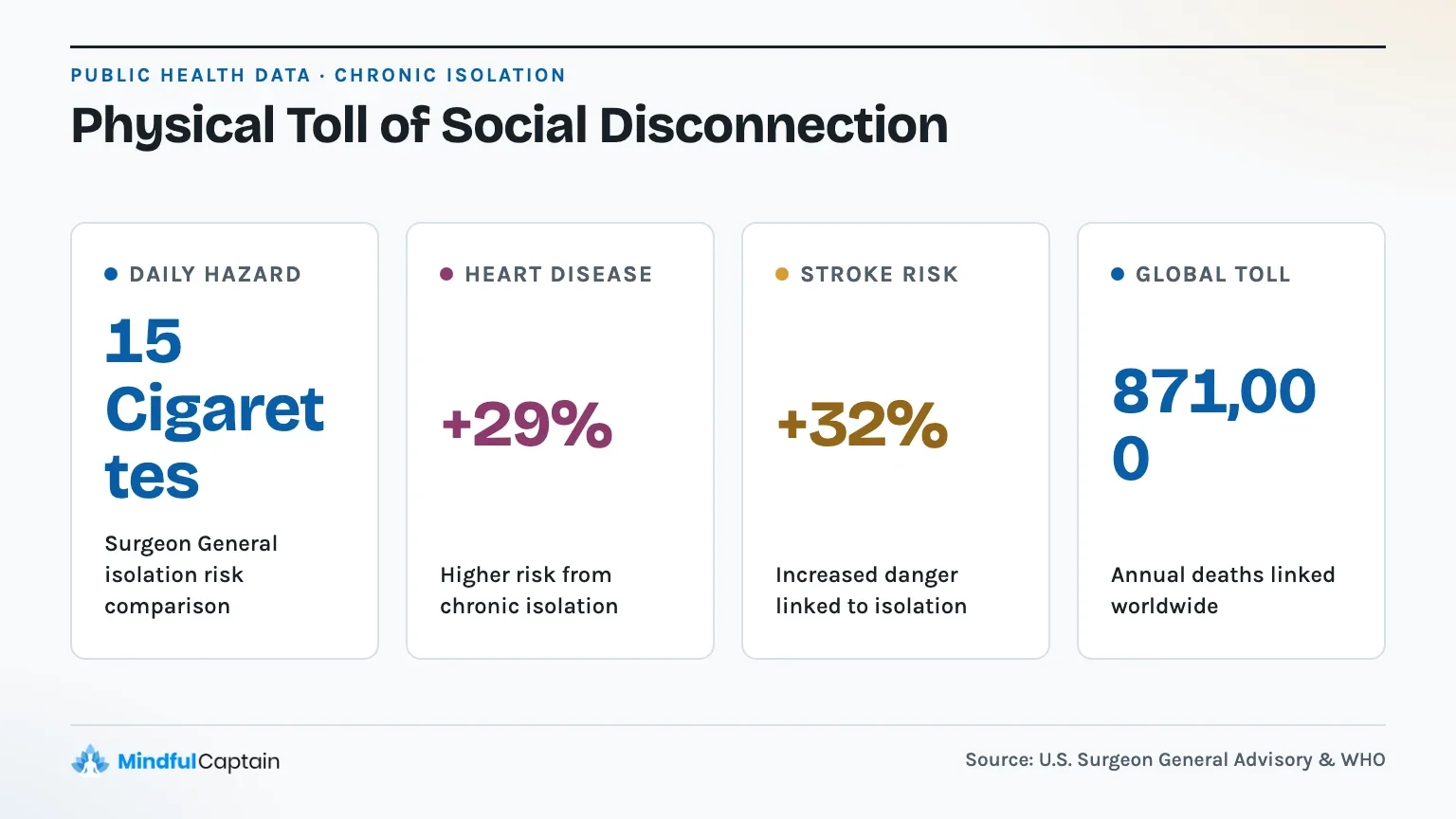
A 2023 advisory from the U.S. Surgeon General compared the risk of social disconnection to smoking up to 15 cigarettes a day.
That advisory also linked chronic isolation to a 29% higher risk of heart disease and a 32% higher risk of stroke.
Global health agencies report similar concerns. In 2025, the World Health Organization found that about 1 in 6 people worldwide experiences loneliness.
The agency also linked isolation to an estimated 871,000 deaths across the globe every single year.
According to reports from the National Institutes of Health, persistent loneliness also links to high blood pressure and cognitive decline.
A 2026 study in Nature Communications tracked over 277,000 adults and found that isolation cost people years of healthy living. Subjective loneliness drained vitality even when people ate well and exercised regularly.
Why Medicine Alone Falls Short
Modern medicine treats high blood pressure, poor sleep, and depression with pills and clinical therapies. These treatments help your symptoms, but they cannot give you a sense of belonging.
A 2026 sociological study warned against treating loneliness as a purely medical disorder. Turning isolation into a clinical illness asks healthcare systems to solve deep community and social problems.
Clinics cannot supply close friends, supportive workplaces, or walkable neighborhoods where people naturally cross paths.
As noted in an advisory from the American Psychological Association, 42% of adults reported feeling lonely at least once a week in 2026.
Pills do not resolve the root cause when your brain senses social danger every day. You need practical habits that calm your biology and encourage healthy social action.

A Daily Framework to Reset Your Body
You can use a simple three-step rhythm throughout your routine: pause, observe, and respond. This pattern interrupts your body’s alarm response before chronic tension takes hold.
Morning Check-In
Start your day before looking at your phone. Place one hand on your chest and take three slow, steady breaths.
Notice any tightness in your stomach or shoulders. Acknowledging tension with kindness helps signal to your body that you are safe right now.
Midday Work Pause
During a busy workday, isolation can creep in during back-to-back tasks. Step away from your desk for two minutes and look out a window.
Feel your feet on the floor and listen to the sounds around you. This sensory reset takes your mind out of survival mode.
Evening Connection
At night, use your calm mental state to take one small social step. Send a warm text to a friend or say hello to a neighbor.
A February 2026 trial in JAMA Network Open showed that brief mindfulness training created lasting drops in loneliness. Calming your mind makes reaching out feel much easier.
Common Obstacles and Realistic Solutions
Many busy adults feel they do not have enough time for mindful routines. You do not need thirty minutes of silent sitting to benefit from this practice.
Even sixty seconds of deliberate breathing at your desk can lower your pulse and ease stress hormones.
You might also worry that your mind wanders too much when you try to focus. Wandering thoughts are completely normal and happen to everyone.
Whenever your thoughts drift, gently bring your focus back to your breath without self-criticism.
Another barrier is expecting mindfulness to fix everything on its own. A 2026 study in BMJ Mental Health showed that mindfulness works best alongside real social contact.
Think of mindfulness as the foundation that helps you show up warmly for social moments.

Long-Term Benefits for Body and Mind
Practicing present-moment awareness changes how your body handles everyday strain. Over time, your nervous system recovers more quickly from stressful social situations.
According to a report from Harvard Health, steady stress reduction supports healthy blood pressure and protects your heart over time.
When you feel steady within yourself, you also become a better listener and friend. You stop reacting out of fear or feeling defensive around other people.
This emotional balance helps you build lasting, supportive ties that keep isolation away for good.
Frequently Asked Questions
Can mindfulness replace my need for friends?
No, mindfulness cannot replace real companionship. It helps soothe your nervous system so you feel ready to connect with other people.
How long does it take to see health benefits?
Your heart rate and muscle tension can ease within a few minutes of calm breathing. Lasting physical benefits develop after several weeks of daily practice.
Can digital apps or AI companions cure loneliness?
Recent research shows that AI chatbots do not reduce real loneliness. Digital tools cannot provide the genuine human safety your biology needs.
Why does loneliness hurt physical health?
Your body perceives isolation as a physical threat, which keeps stress hormones elevated. Over time, that constant stress damages blood vessels and weakens your immune defenses.
Reclaiming Your Health and Connection
You do not have to wait for your schedule to clear before you protect your body from isolation. Take one conscious breath right now, feel your feet on the ground, and release your shoulders.
Pair your inner calm with one outward step today, like calling a friend or greeting a coworker. Your body thrives on real presence and true connection, and you can begin nurturing both today.