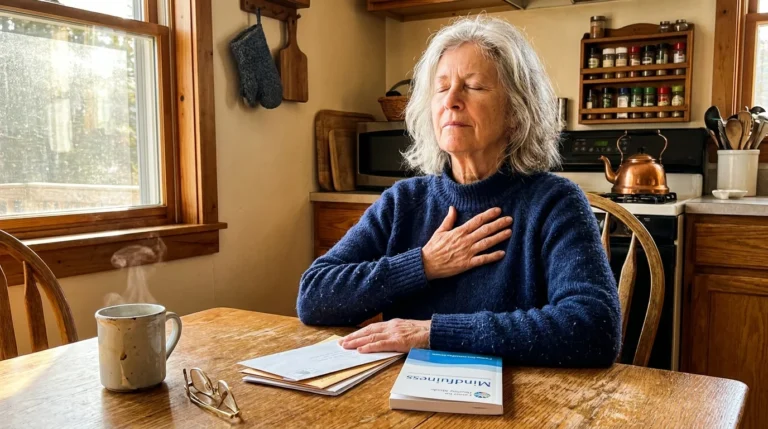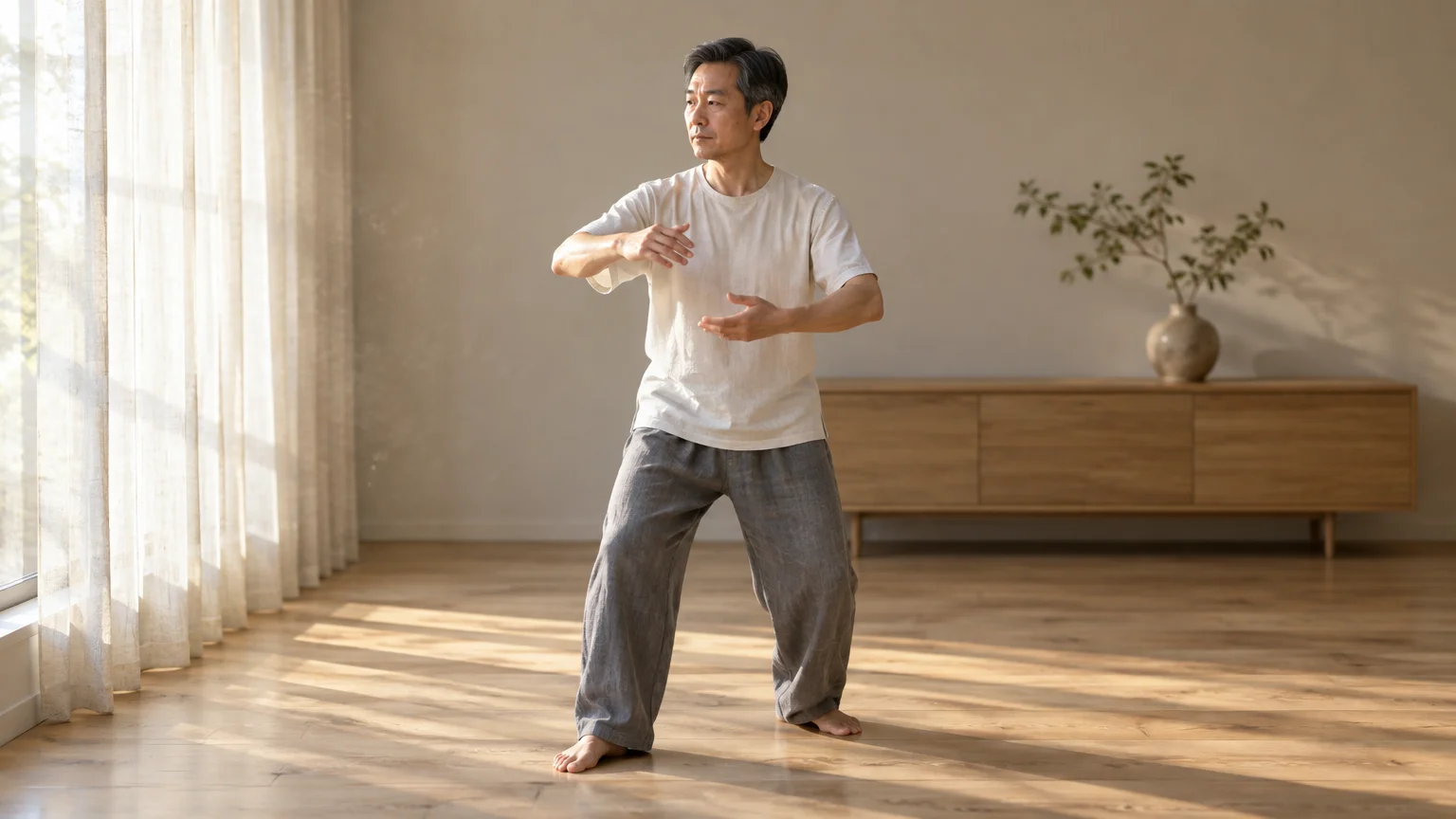
Waking up with tight shoulders and an alert mind often derails your morning before it begins. A ten-minute routine of mindful movement offers a practical way to ease early physical stiffness and settle your thoughts.
Tai chi invites you to replace early morning urgency with slow, rhythmic breathing and deliberate posture shifts. This deliberate pacing helps calm your nervous system so you feel centered before checking your phone.
You do not need specialized athletic gear or prior experience to practice. Ten quiet minutes in your living room will help you meet daily demands with greater calm.
In This Briefing08 Sections ▾
- 01Understanding Mindful Movement in the Morning
- 02What Research Reveals About Tai Chi and Stress Relief
- 03The 10-Minute Morning Flow: Step by Step
- 04Daily Integration: The Pause, Observe, Respond Framework
- 05Overcoming Morning Obstacles
- 06Long-Term Benefits of Consistent Flow
- 07Frequently Asked Questions
- 08Step Into Your Day With Intention
Understanding Mindful Movement in the Morning
Many people mistake morning tension for a purely mental problem. In reality, stress regularly lodges in your physical body through shallow breathing, a clenched jaw, and rigid posture.
Tai chi combines continuous physical shifts with conscious respiration to address both body and mind. Practitioners often describe it as moving meditation because your mind stays entirely anchored in physical sensation.
A widespread misconception suggests that tai chi requires mastering hundreds of choreographed steps before experiencing any benefit. That belief is incorrect; even single, isolated movements help interrupt early morning anxiety.
You only need enough open floor space to take one comfortable step in any direction. The goal is gentle consistency rather than rigid athletic mastery.
What Research Reveals About Tai Chi and Stress Relief
Modern clinical research provides encouraging insights into how slow movement affects mental wellbeing. According to a resource from the Mayo Clinic, tai chi offers a safe, low-impact way to reduce stress while improving balance and physical flexibility.
However, scientific accuracy matters when discussing bodily chemistry. A comprehensive June 2024 meta-analysis evaluated eleven randomized controlled trials and found tai chi significantly reduced perceived stress and anxiety.
Interestingly, that same review showed that biological markers—including cortisol, resting heart rate, and blood pressure—remained largely unchanged. This distinction means mindful movement reshapes your subjective experience of pressure even before altering systemic hormonal levels.
Furthermore, guidelines from the National Institutes of Health highlight tai chi for anxiety relief and nervous system balance. Recent evidence confirms that self-practice sessions as short as ten minutes still yield measurable calm.
The 10-Minute Morning Flow: Step by Step
Slip off your shoes or wear flat, supportive footwear before you begin. Keep your knees soft, relax your tailbone, and let your breath flow naturally through your nose.
1. Centering and Grounded Breathing (Minutes 0 to 2)
Stand tall with your feet placed shoulder-width apart and your arms resting loosely at your sides. Lower your center of gravity by softening your knees and unlocking your hips.
Inhale slowly while floating both hands up to chest height with your wrists relaxed. Exhale gently as you press your palms downward toward your lower abdomen.
Repeat this rhythmic rise and fall for two minutes. Coordinate each breath with your movement to signal to your body that you are safe and unhurried.
2. Commencing the Form (Minutes 2 to 4)
From your centered stance, slowly shift your weight into your right foot while keeping your torso upright. Turn your torso slightly to the right, letting your arms follow your waist naturally.
Shift your body weight across to your left foot with a smooth, gliding motion. Allow your hands to trace gentle arcs through the air as if pressing through warm water.
This weight transfer lubricates your hips and strengthens subtle stabilizer muscles in your legs. It also redirects your attention away from racing mental checklists.
3. Parting the Wild Horse’s Mane (Minutes 4 to 7)
Bring your hands in front of your chest as if holding an invisible beach ball. Keep your right hand on top and your left hand underneath, curved upward.
Step diagonally forward with your left heel as you gently shift your weight forward. Simultaneously, sweep your left palm upward to eye level while floating your right palm downward beside your hip.
Draw your back foot forward, form the ball on the opposite side, and repeat the movement toward the right. Continue alternating sides with fluid, continuous momentum.
4. Cloud Hands and Gentle Return (Minutes 7 to 10)
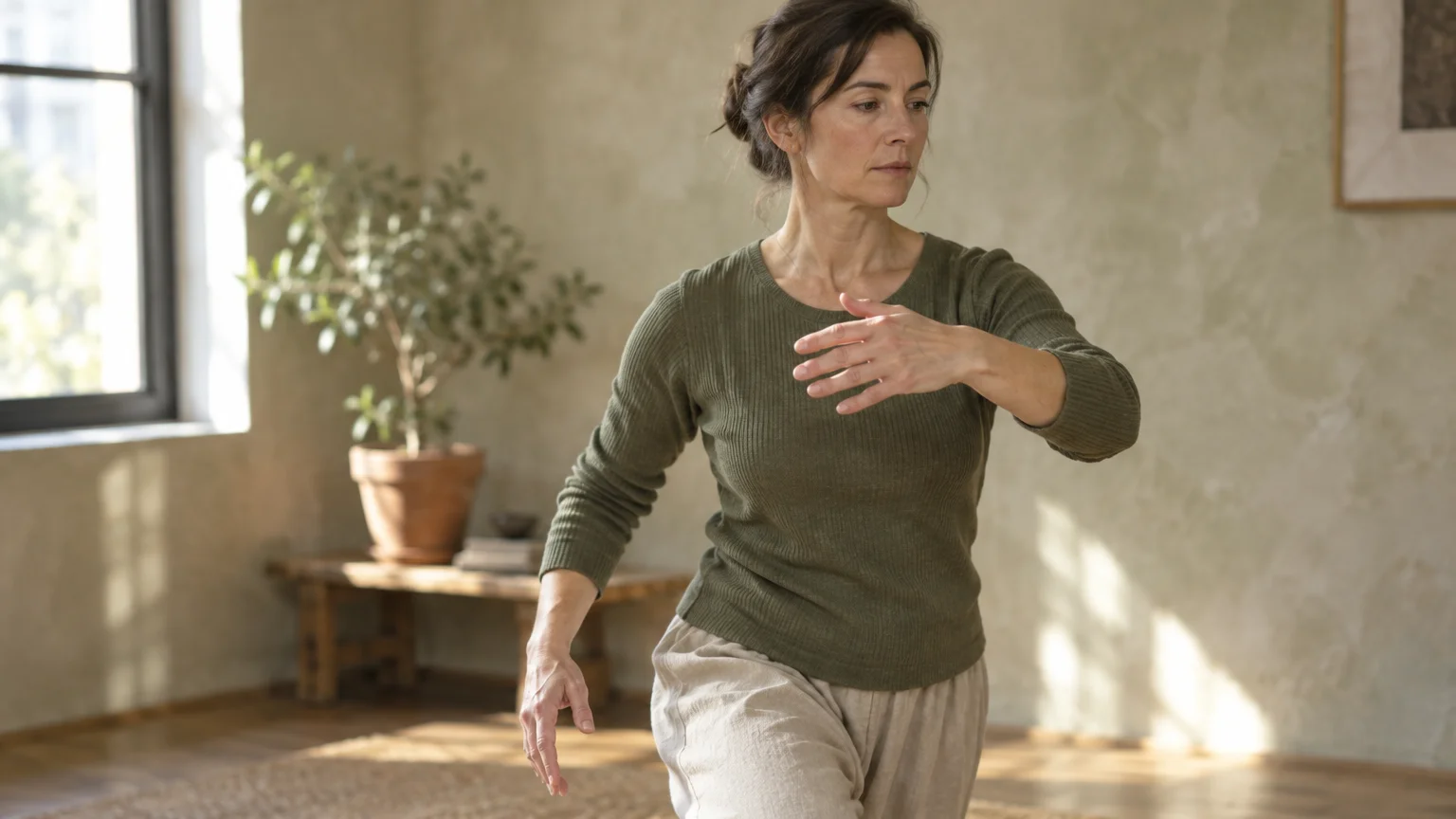
Return your feet to parallel alignment and begin moving your hands in circular paths across your chest. As one hand sweeps across your face level, the other floats past your waist.
Rotate your waist smoothly from side to side to drive the motion of your arms. This rotational movement releases stiffness built up in your spine and upper back during sleep.
Conclude your practice by gathering your hands over your lower belly, resting one palm over the other. Take three slow, expansive breaths to store the sense of grounded calm.
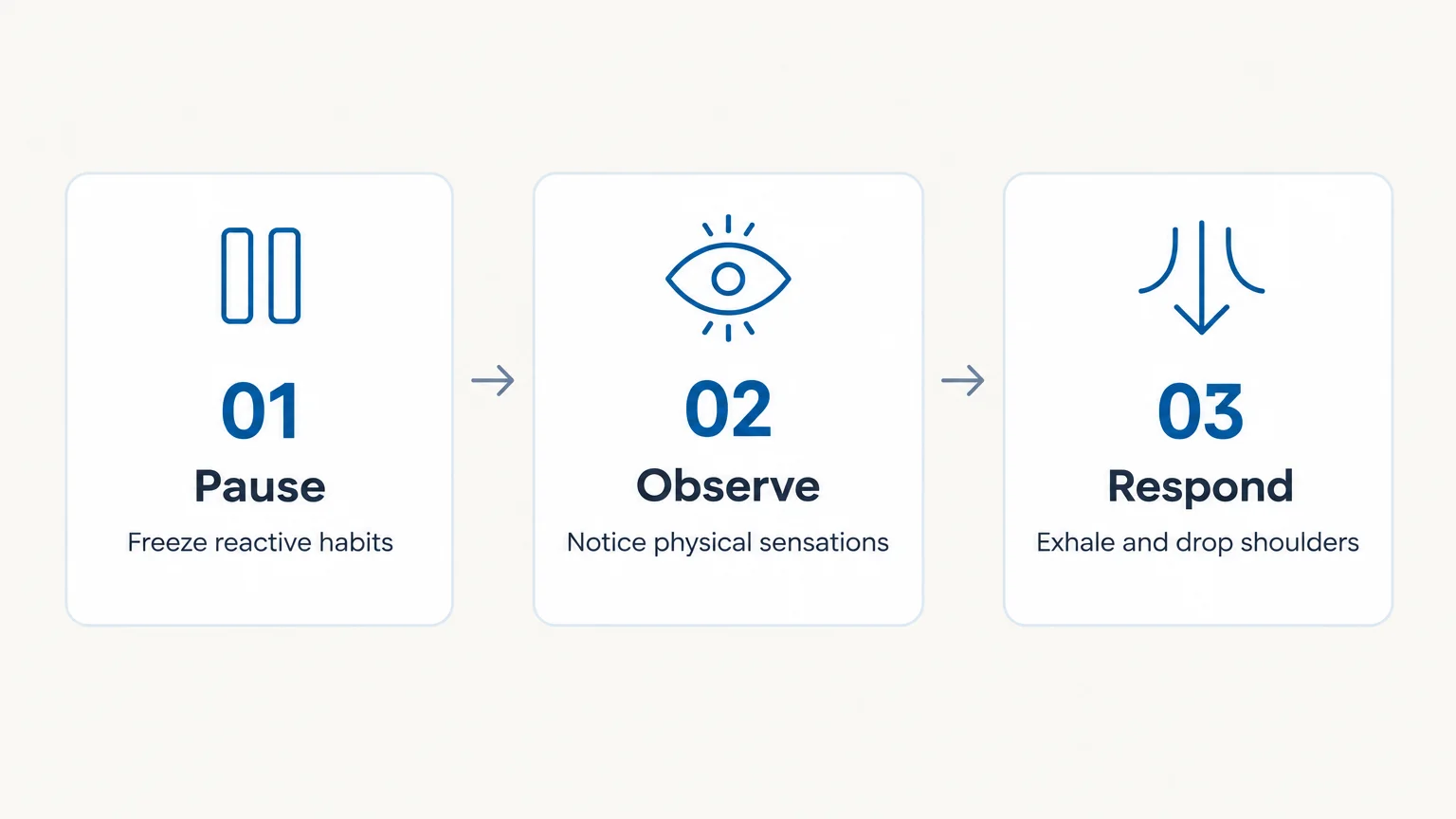
Daily Integration: The Pause, Observe, Respond Framework
The physical flow takes ten minutes, but its value extends into the rest of your day. You can carry this calm mindset into demanding moments using a simple three-step mental framework.
First, pause your physical movement when an unexpected deadline or tense conversation catches you off guard. Freezing reactive habits for even two seconds breaks automatic stress cycles.
Second, observe the sensations in your body without judgment. Notice whether your shoulders crept toward your ears or whether your breathing turned shallow.
Third, respond with deliberate physical posture. Drop your shoulders, exhale fully, and address your colleagues or family members from that relaxed foundation.
According to research from the American Psychological Association, recognizing early physical signals of distress helps you regulate emotional reactions. Mindful movement trains you to spot those signals quickly.
Overcoming Morning Obstacles
Mornings rarely go according to plan, and establishing new habits can feel daunting when demands compete for your attention. Anticipating common hurdles helps you stay consistent.
If you lack time, remember that some movement is always better than none. Practicing just two minutes of deep breathing and weight shifting still provides meaningful nervous system support.
When your mind wanders back to work emails, avoid self-criticism. Simply acknowledge the thought and guide your attention back to the sole of your foot touching the floor.
If you feel skeptical about slow exercise, treat the practice as a physical experiment rather than a spiritual obligation. Pay attention to how your neck and shoulders feel immediately after moving.

Long-Term Benefits of Consistent Flow
Committing to regular movement alters your baseline response to daily pressures over time. Regular practitioners develop greater postural balance, joint comfort, and mental endurance.
A comprehensive review featured in a report from Harvard Health notes that regular mind-body exercise fosters emotional resilience alongside physical coordination. Cumulative practice trains your nervous system to recover faster from acute stressors.
Consistency also supports restful evening sleep by preventing daily tension from compounding. When you start your day with ease, you end your day with fewer physical knots.
Frequently Asked Questions
Will this ten-minute flow immediately lower my cortisol?
Current clinical research shows that short bouts of tai chi reduce perceived stress and anxiety rather than immediate cortisol levels. The benefit comes from training your brain to interpret morning demands without panic.
Do I need special shoes or equipment to begin?
You need no special gear whatsoever. Practice barefoot on a non-slip rug or wear flat, comfortable shoes that allow your toes to spread naturally.
Can I practice tai chi if I have stiff joints or limited mobility?
Yes, tai chi is exceptionally gentle on joints and easily adapts to your comfort zone. You can shorten your stance or even perform the arm movements while seated in a sturdy chair.
How quickly will I notice a difference in my stress levels?
Most people experience a calmer mental state and relaxed shoulder muscles right after their first ten-minute session. Greater emotional resilience and physical balance build steadily over several weeks of regular practice.
Step Into Your Day With Intention
Your morning sets the trajectory for every conversation, task, and challenge that follows. Rather than rushing into reactive urgency, gift yourself ten quiet minutes of continuous, grounded motion.
Place your feet firmly on the floor, release your shoulders, and inhale deeply. Remember your mantra for today: move like water, stand like a mountain.